US LNG Exports Hit Second-Highest Record: The Energy and Compute Undercurrent Behind Europe's Surge
In October, US liquefied natural gas (LNG) exports reached 7.92 million metric tons, the second-highest monthly level on record. With European demand now accounting for about 60% of these shipments, this shift in global energy supply chains is not just a geopolitical move—it has profound implications for the power costs and stability of AI data centers.
What Happened?
Recently, there was a major development in the energy sector: US LNG exports in October surged to 7.92 million metric tons. To put that number in perspective, it is the second-highest monthly level in US history, trailing only April's record of 8.01 million metric tons.
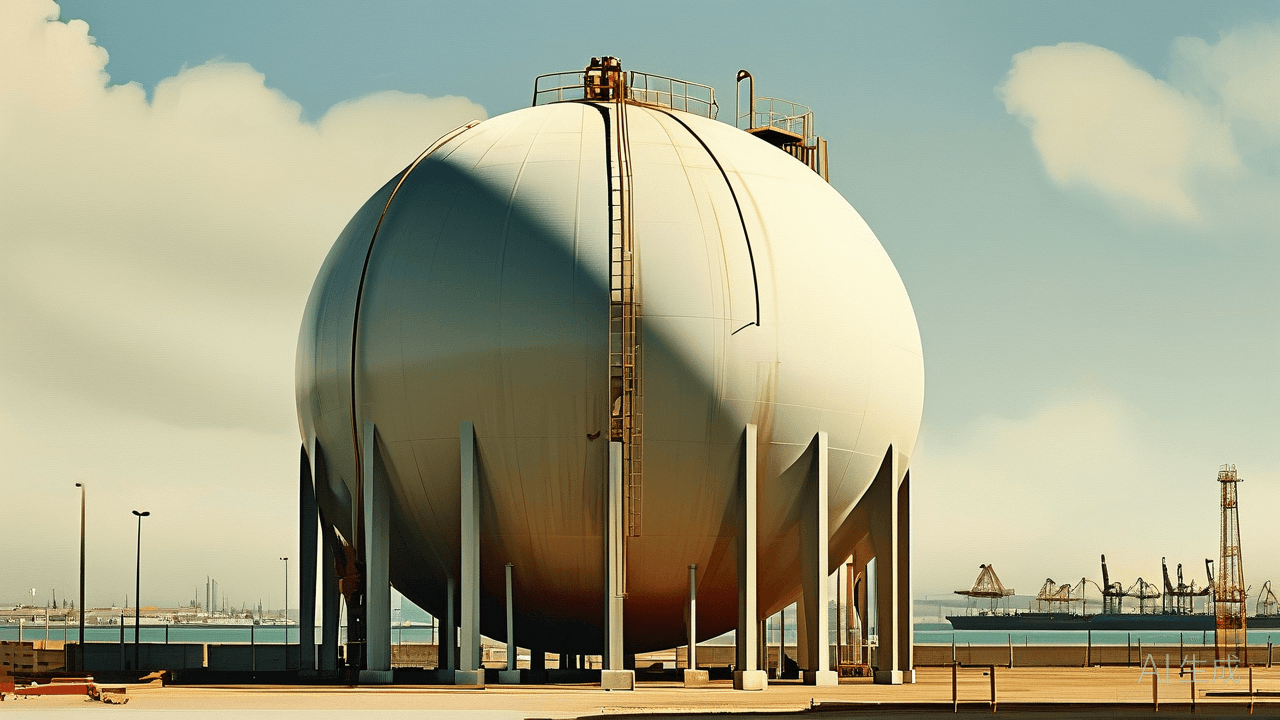
Even more noteworthy is the change in destination. Europe's share of US LNG imports jumped significantly, reaching roughly 60%. This means that American natural gas, which was historically primarily supplied to Asia or consumed domestically, is now being shipped to Europe at scale. In simple terms, the US is becoming a crucial "ballast" for European energy security.
Why Does This Matter to You?
You might ask, "I don't buy natural gas directly; why should I care?" The impact is actually much broader than you might think.
First, it affects your electricity bill. Natural gas is a key fuel for power generation, particularly in Europe. When Europe imports large volumes of US LNG, the cost of shipping and liquefaction is passed on to end-user electricity prices. For regular consumers, this can translate into fluctuations in winter heating costs and everyday power expenses.
Second, it impacts the speed and reliability of the AI services you use. This is often an overlooked factor. Major tech giants (such as Microsoft and Amazon) are currently building massive data centers across North America and Europe. These facilities are extremely power-hungry and require stable, low-cost electricity. If Europe's energy mix remains unstable, or if electricity prices stay high due to LNG import costs, the operational expenses for AI servers deployed in Europe will rise. In other words, every model you run in the cloud and every image you generate requires real, tangible electricity consumption. The stability of the energy supply chain directly dictates the pace and cost floor of AI infrastructure expansion.
Deep Dive: Why Now?
To put it plainly, this represents a reshuffling of the global energy landscape.
Historically, Europe sourced most of its natural gas from Russian pipelines. However, shifting geopolitical dynamics have broken this dependency. US LNG now reaches Europe via maritime routes. While this logistics chain is longer, it offers diversified options. This shift—from "pipeline dependence" to "maritime diversification"—is fundamentally a strategic adjustment prioritizing security over cost.
From another angle, this reveals a hidden bottleneck in the tech industry. Many assume that AI competition hinges on chips and algorithms. In reality, the stability and cost of power supply are the hard constraints. As companies like Alphabet (Google's parent company) and Meta issue bonds to finance their AI build-outs (reports indicate they are conducting large-scale bond issuances to support capital expenditures), their biggest concern isn't necessarily whether they can buy enough GPUs, but whether electricity bills will skyrocket over the next few years due to changing energy policies. The strong performance of US LNG exports sends a signal to the market: North America's energy supply capacity remains robust. This is a positive indicator for tech companies looking to locate data centers in North America.
A Note of Caution: Don't Overinterpret "Energy Independence"
It is important to temper expectations: do not assume that Europe has completely shaken off its fossil fuel anxieties.
Despite increased LNG imports, Kazimír, a member of the ECB Governing Council, recently noted that the energy price shock has not yet subsided and that upside inflation risks remain significant. This means that elevated energy costs continue to squeeze Europe's economic growth space. For ordinary people, this may manifest as sustained pressure on the cost of living. Furthermore, LNG is still a fossil fuel, and its combustion produces carbon emissions. Therefore, this is not a perfect solution, but rather a pragmatic stopgap during a transition period.
Additionally, be mindful of data recency. LNG exports are highly sensitive to seasons, weather, and geopolitical events. Data from a single month does not represent a long-term trend. If extreme weather or new geopolitical conflicts arise, this balance could be disrupted at any time.
Broader Perspective: The Future Symbiosis of Energy and Tech
Over the next decade, energy and technology are likely to form a deep "symbiotic relationship."
On one hand, the tech industry needs cleaner, more stable energy to support its exponentially growing computing demands. On the other hand, the energy sector needs digital technologies to improve efficiency. The rise of US LNG exports is merely a small part of this larger narrative. We can observe that as the share of renewable energy increases and nuclear technology sees a revival, the map of global power supplies may be redrawn again. But for now, understanding the direction of energy flows is key to understanding the logic behind where tech infrastructure lands.
If you follow tech investments, pay close attention to data center projects located in energy-rich regions. If a cloud provider expands in areas with high sensitivity to power costs, its profit margins may be squeezed. Conversely, securing long-term, low-cost power contracts provides a stronger competitive advantage.
Summary & Discussion
In short: The record-high US LNG exports are not only reshaping Europe's energy landscape but also underpinning the cost logic of global AI computing power.
Question for the comments: Do you think power costs or network latency will have a greater impact on AI data center location choices over the next five years? Share your thoughts.