Is AI Stealing Your Face? TikTok Tests a Detection Tool to Help Creators Fight Back
TikTok is piloting an AI likeness detection tool that lets creators proactively find and report deepfakes of themselves, shifting enforcement from reactive takedowns to active monitoring.
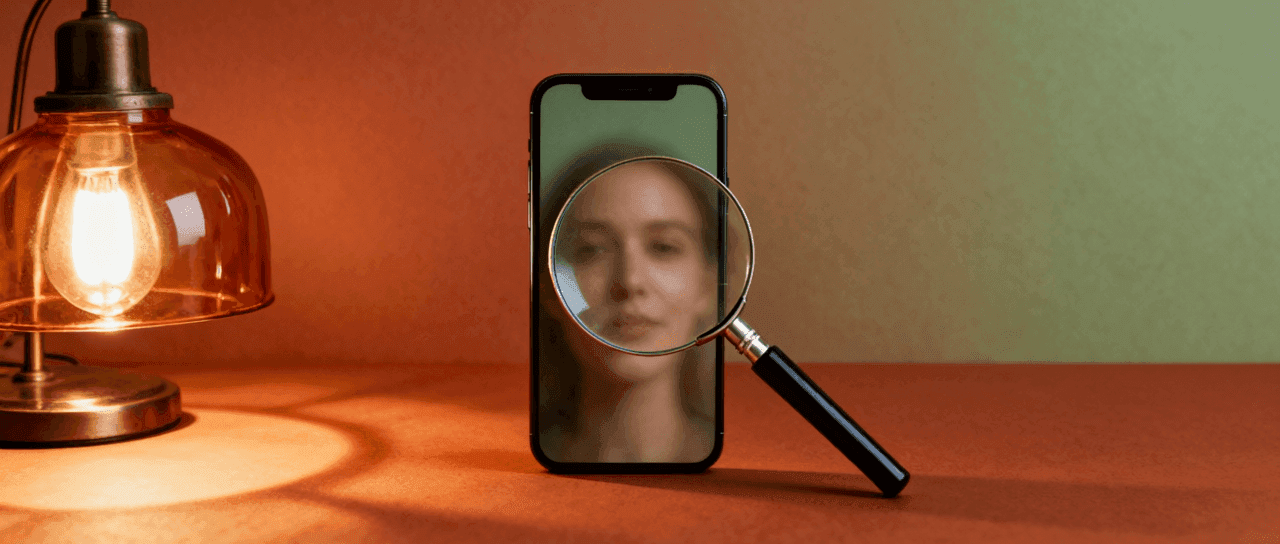
Imagine this: you spend hours editing a vlog, only to discover the next day that an account has used your face to generate a completely unrelated video—perhaps a crude meme or a fake ad. You report it, but the platform says it "cannot confirm infringement." This scenario is becoming everyday reality for more and more creators. AI face-swap technology is now so accessible that a single photo or short clip can produce a convincing digital replica of you. Worse, these videos often go viral before the original creator even notices. This is not harmless parody; it is a direct violation of a creator's right to their own likeness. When a beauty influencer's face ends up in a scam ad, or a fitness coach's image is spliced into inappropriate content, the damage goes beyond reputation—it hits commercial value, too.
Platforms Are Handing Discovery Power to Creators
TikTok is reportedly testing an AI likeness detection tool that allows creators to proactively report AI-generated face-swap content. Instead of waiting passively for others to flag infringing material, creators can now actively search for and request removal of unauthorized uses of their image. This marks a shift in platform governance philosophy. Previously, platforms relied mainly on user reports or automated detection algorithms. But as AI-generated content becomes harder to identify—especially when face-swap technology produces hyper-realistic results—those methods fall short. Now, TikTok is giving the "discovery power" to creators themselves. After all, no one knows your face better than you do. What does this mean in practice? Creators gain a more direct enforcement channel. You no longer need to prove "this video is fake"—you can simply tell the platform, "That is my face, and I did not authorize its use."

From Reactive Firefighting to Proactive Patrolling
Consider a concrete example. Suppose you are a food blogger with 100,000 followers, and you discover an account using your face to promote a dietary supplement. Under the old process, you would need to take screenshots, record the screen, file a report, and then wait for the platform to review it. That review could take days or weeks—during which the video might rack up hundreds of thousands or even millions of views. With the new AI likeness detection tool, you can scan the platform's content directly, quickly locating videos that use your image. This dramatically shortens the enforcement timeline and lowers the burden of proof. That said, the tool is still in testing, and its actual capabilities remain to be seen. Can it accurately detect every type of AI face-swap? Can it handle varying lighting conditions and camera angles? Those questions are still open.
Hidden Concerns Behind Faster Enforcement
TikTok's move reflects a broader trend: platforms are shifting from post-hoc takedowns to preemptive prevention plus active discovery. In the past, governing AI content relied on two main tools: algorithmic detection and user reporting. Both have limitations. Algorithms are prone to false positives and false negatives; user reports are inherently lagging—content is often already widespread by the time it gets flagged. By turning creators into "active patrollers," TikTok is not only improving enforcement efficiency but also reducing its own moderation costs. More importantly, this approach respects creators' agency—you are the primary stakeholder in your own likeness. If this model proves effective, other platforms will likely follow suit, since AI-generated content governance is an industry-wide challenge. However, the tool also raises concerns worth watching. First, there is the risk of false or malicious reports. What if someone wrongly claims that a legitimate use of their likeness is infringing—for instance, a news article using a publicly available photo, or an artistic work making fair use of their image? How will the platform balance likeness rights with freedom of expression? Second, there are technical boundary issues. How far can the detection tool reach? Simple face-swaps may be relatively easy to spot, but what about stylized transformations or partial use of facial features? There is also a deeper question: when creators can proactively scan the entire platform, could "over-enforcement" emerge? For example, someone might report every person who merely resembles them, or suppress legitimate parody and homage.

The Tug-of-War Between Technical Limits and Rights Boundaries
At its core, this is a question of how technical capability aligns with the boundaries of rights. AI face-swap technology has advanced to the point of producing near-indistinguishable fakes, yet platforms' detection abilities lag far behind. By handing discovery power to creators, TikTok is implicitly acknowledging that in the AI era, no single platform can shoulder full responsibility for content governance. Future content moderation will be a multi-party effort: platforms provide the tools, creators actively patrol, and users report and oversee. But this model has its own limitations. Casual creators may lack the time and energy to conduct regular scans, while professional agencies or multi-channel networks (MCNs)—firms that manage large rosters of influencers—could use the tool for mass enforcement, creating new power imbalances. It is also worth noting that when enforcement becomes easier, it can be misused. Someone might weaponize the tool to suppress competitors or over-claim rights against legitimate derivative works. Platforms will need to strike a balance between protecting creators' rights and maintaining a healthy content ecosystem.
Takeaway
One-line summary: TikTok is testing an AI likeness detection tool that shifts creators from passive rights enforcement to active discovery—a new approach to governing AI-generated content, but one that also carries risks of false reports and over-enforcement.
Question for you: If you were a creator, how would you use this tool? How should platforms balance likeness protection with creative freedom? Share your thoughts in the comments.