Tesla's Profit Plunge: The Valuation Battle Between Selling Cars and Software
Tesla's net profit has dropped sharply, wiping out a market cap equivalent to General Motors in a single day. However, FSD subscriptions grew by 700,000 users in one year. This isn't just financial noise; it marks a fundamental shift in the automotive business model.
When Selling Cars Loses Its Shine
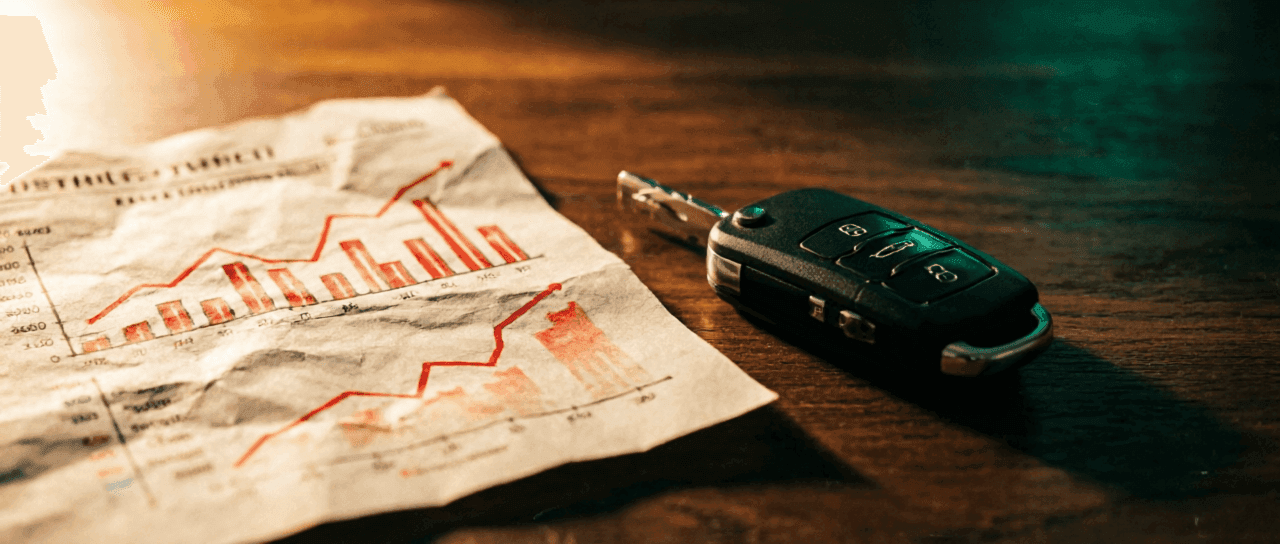
On October 23, 2026, Tesla released earnings that unsettled Wall Street. Reports indicate a significant drop in net profit, described as a "halving" of margins. The stock price fell sharply, with its single-day market value loss temporarily exceeding the total market capitalization of General Motors (GM). The impact of this figure goes far beyond simple stock price fluctuations.
In plain terms, this suggests that the "hardware premium" logic that supported Tesla's high valuation over the past decade is failing. As electric vehicle (EV) competition intensifies globally, price wars have become the norm. The traditional model of making money primarily through hardware sales is hitting a ceiling. Investors are now re-evaluating: if hardware margins continue to thin, what justifies Tesla's current valuation?
Subscriptions: The Growth Engine in the Shadows
While traditional car sales face pressure, another metric is rising steeply. As of October 24, 2026, the total number of paid subscribers for Tesla's Full Self-Driving (FSD) feature reached 1.74 million, an increase of approximately 700,000 users in the past year. Notably, more than 75% of new car delivery orders in North America now include FSD functionality or related hardware configurations.
This may be Tesla's true moat. FSD is not a one-time purchase but a recurring revenue SaaS (Software as a Service) model. Each additional user adds a layer of long-term, predictable cash flow. This shift from "selling hardware" to "selling services" fundamentally changes the company's valuation anchor—Tesla is no longer just an automaker, but a technology company with a massive data entry point.
Safety Controversies: A Trust Crisis Amidst Missing Data
However, beneath the surface, tensions are rising. On October 24, 2026, an accident involving the FSD system occurred on Interstate 80 in the US, resulting in the death of a 71-year-old man. Reports state the vehicle was traveling at 70 mph (approx. 113 km/h) and exhibited sudden steering behavior. Crucially, key driving data was missing, sparking strong public questioning about the system's safety.
It is worth noting that when such accidents lack transparent data support, they easily evolve into trust crises. The public asks: Was it an algorithmic error or human operation? Without "black box" data, gaps can only be filled with emotion and speculation. Although Tesla plans to launch higher-level Robotaxi services in specific regions by Q2 2027—indicating confidence in its technological maturity—each safety incident consumes this reserve of trust.
The Gamble and Variables in the Chinese Market
During the earnings call, Elon Musk emphasized that FSD is a core product and claimed Tesla would maintain a leading advantage in the Chinese market. One interpretation is that he sees China's high consumer acceptance of intelligent driving and rapid iteration capabilities. If FSD can successfully undergo local adaptation, it certainly has the potential to rapidly expand its user base.
However, if regulatory environments, data compliance, and reactions from local competitors are not properly managed, this optimism could turn into recklessness. After all, China's autonomous driving sector already features many strong players; Tesla is not the only option. Historical experience shows that the key to success for multinational tech companies in China often lies not in the technology itself, but in a deep understanding and compromise with the local ecosystem.
Key Takeaway
Tesla is undergoing a profound business model transformation: shifting from reliance on car sales profits to building long-term revenue through FSD subscription services. The halving of profits is the pain of the old model dying, while the surge in FSD users is the hope of the new model. But safety controversies and data transparency issues remain a sword hanging overhead. Whether Tesla can truly win public trust will determine the final outcome of this gamble.
One-sentence summary: Tesla's profits have been cut in half, but FSD users grew by 700,000 in a year—it is transforming from a car-selling company into a software service provider.
Discussion: If you were considering buying a Tesla with FSD today, would recent safety incidents make you hesitate? Why or why not?

