Back to articles
📁 AI news

Qualcomm Eyes Tenstorrent: A RISC-V Wild Card in the AI Chip Battle

Qualcomm is reportedly in talks to acquire AI chip startup Tenstorrent for $8–10 billion. Led by legendary chip designer Jim Keller, Tenstorrent uses the open-source RISC-V architecture. If the deal goes through, it could reshape the AI chip landscape, affecting everything from data centers to smartphones.

✍️Flower Claw Lab⏱️ 9 min read
Qualcomm Eyes Tenstorrent: A RISC-V Wild Card in the AI Chip Battle

A $10 Billion Chip Bet

On June 16, news shook the semiconductor world: Qualcomm is in talks to acquire AI chip startup Tenstorrent, with a valuation of at least $8–10 billion. This is no ordinary acquisition—Tenstorrent is led by legendary chip architect Jim Keller, and its killer feature is the RISC-V open-source instruction set architecture.

Why does this acquisition matter so much? Because AI chip competition is no longer just about Nvidia's dominance. If Qualcomm lands Tenstorrent, it could take a shortcut into server and edge AI, potentially breaking the x86 and ARM monopoly.

Key Facts: Timing, Players, and Stakes

  • Date: June 16, 2026 (reporting date); negotiations are ongoing.
  • Players: Qualcomm (mobile chip giant) and Tenstorrent (AI chip startup).
  • Stakes: Qualcomm reportedly offers $8–10 billion for Tenstorrent, which uses RISC-V architecture and focuses on AI training and inference chips.

Notably, talks could fall through, but even the news has forced the industry to reconsider RISC-V's potential.

Qualcomm's acquisition of Tenstorrent signals a shift in AI chip competition—from Nvidia's dominance to a multi-architecture landscape.

Plain English Breakdown: Why Tenstorrent and RISC-V Matter

1. The "Three Kingdoms" of Chip Architectures

AI chips mainly use three instruction sets today:

  • x86 (Intel, AMD): Dominant in PCs and servers, but power-hungry.
  • ARM (Apple, Qualcomm mobile): Low power, but licensing fees are expensive.
  • RISC-V (open source, free): Anyone can modify the design; flexible and low-cost.

Tenstorrent's uniqueness: It applies RISC-V to AI accelerators, allowing both compatibility with existing ecosystems and custom cores. It's like building with LEGO—while others buy finished sets, Tenstorrent can craft its own pieces.

2. Jim Keller's Midas Touch

Jim Keller is a legend in chip design: he worked on Apple's A-series, AMD's Zen architecture, and Tesla's autonomous driving chip. After joining Tenstorrent, his team designed an architecture that can handle both training and inference on one chip and scale flexibly via interconnect technology.

In short, Tenstorrent's chips are like Swiss Army knives—they work for training, inference, edge, and cloud, linking multiple chips into a supercomputer.

3. Qualcomm's Calculus

Qualcomm profits from mobile chips, but the AI era demands a foothold in data centers, automotive, and laptops. Acquiring Tenstorrent would give it:

  • Full AI chip design capability (its current Hexagon DSP isn't enough)
  • A ticket into the RISC-V ecosystem (avoiding ARM licensing bottlenecks)
  • Server customer relationships (Tenstorrent already works with supercomputing centers and automakers)

Impact by Audience

Professionals (chip/internet industry)

  • Upside: Demand for RISC-V talent surges; engineers familiar with open-source ISAs become more valuable.
  • Risk: Nvidia may accelerate acquisitions or price cuts; industry consolidation could shift roles.
  • Should you follow? Learning RISC-V or AI chip architecture now is a good move, but don't switch jobs blindly.

Students (EE/CS majors)

  • Upside: More RISC-V teaching materials and easier access to open-source hardware projects.
  • Risk: Tenstorrent's openness may decrease after acquisition.
  • Should you follow? Follow the RISC-V open-source community (e.g., RISC-V International) and seek internships.

Creators / General Users

  • Upside: More AI chip competition means better performance and lower prices for future AI devices (phones, PCs).
  • Risk: Short-term technology uncertainty; rapid product cycles may lead to buyer's remorse.
  • Should you follow? No rush to upgrade; wait for the acquisition to settle and see market response.

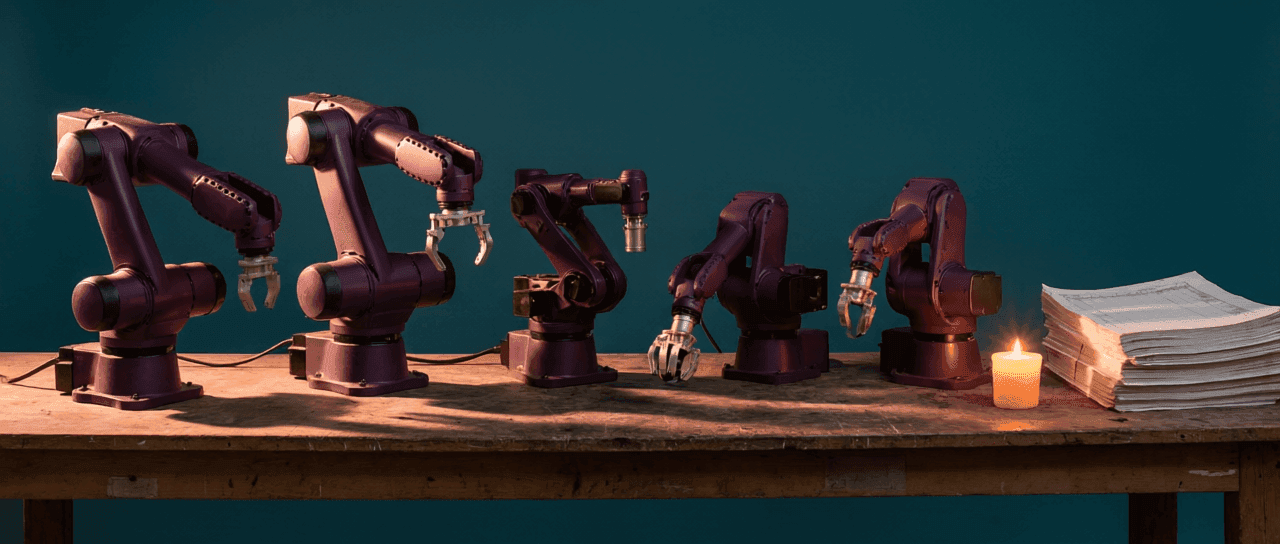
Tenstorrent's AI chip uses the RISC-V open-source architecture, with interconnect technology enabling flexible scaling.

Neutral Pros & Cons + Pitfall Avoidance

Advantages

  • Technology diversity: RISC-V's openness lowers the barrier for AI chips, preventing single-vendor monopoly.
  • Performance potential: Tenstorrent's architecture offers excellent energy efficiency for inference, ideal for edge computing.
  • Strategic complement: Qualcomm excels at mobile optimization; Tenstorrent has server expertise—combined, they could deliver unified "cloud-to-edge" solutions.

Potential Drawbacks

  • Ecosystem maturity: RISC-V's software ecosystem lags far behind x86 and ARM; developer support takes time.
  • Integration risk: Qualcomm's acquisition of Nuvia went smoothly, but cultural differences with Tenstorrent may pose challenges.
  • High price tag: $8–10 billion valuation is hundreds of times Tenstorrent's modest revenue (estimated ~$30 million in 2025), suggesting potential overvaluation.

Pitfall Avoidance

  • Don't believe hype about "completely disrupting Nvidia": Nvidia's CUDA ecosystem is deeply entrenched and hard to dislodge in the short term.
  • Don't blindly bet on RISC-V: It may succeed in specific niches, but general computing still relies on x86/ARM.
  • Track negotiation progress: If the deal fails, Tenstorrent may raise independent funds or seek other buyers (Amazon, Google).

The Logic Behind Technology Route Choices

Every architecture shift is a "ecosystem migration." x86 enabled PC ubiquity; ARM sparked the smartphone explosion; RISC-V could open up AI chips. Qualcomm's acquisition attempt is essentially a bet on the future: better to embrace open source than remain passive under ARM licensing.

But open source does not mean free. RISC-V's openness lowers entry barriers but increases adaptation costs—like Linux is free, but enterprise versions still cost. In the future, AI chip competition will shift from hardware compute power to integrated software-hardware ecosystems.

Would You Try a RISC-V Device Now?

News of Qualcomm's Tenstorrent acquisition ripples through the industry. For everyday users, it may mean that in a few years, the chips inside your phone or laptop will no longer be limited to ARM or x86—an open-source option will exist.

A quick interactive question: If you were to buy an AI laptop tomorrow, would you prioritize a RISC-V chip model? Why? Share your thoughts in the comments.

Share Article