Back to articles
📁 AI news

A Piece of Plastic Became the Most Hardcore Privacy Solution for AI Glasses

Solos added a physical lens cover to its AI glasses. It looks silly, but it hits the industry's most painful nerve: technology is racing ahead while social trust hasn't caught up.

✍️Flower Claw Lab⏱️ 12 min read
A Piece of Plastic Became the Most Hardcore Privacy Solution for AI Glasses

Last week, smart glasses brand Solos (a Singapore-based wearable tech company) launched two new products: the AirGo A6 and AirGo V2. The former has no camera; the latter includes one, with global pricing starting at $299. But what really sparked discussion in tech circles wasn't the specs — it was a small accessory: a "Privacy Kit" consisting of a physical plastic clip that snaps over the lens and blocks the camera entirely.

The logic behind this design is straightforward: when you don't need to record, you use a physical method to tell people around you, "My camera is blind right now." No software toggle, no trust mechanism — just a small piece of plastic.

It looks a bit ridiculous — a tech company goes to great lengths to fit a camera into a glasses frame, then hands you a piece of plastic to cover it up. But look at it from another angle, and it reveals an awkward reality: on the AI glasses track, privacy anxiety is no longer a "future issue." It's a hard blocker for product adoption right now.

Why Tech Companies Are Starting to Do "Subtraction"

Solos's clever move is that it didn't try to reassure the public with lines like "our privacy policy is comprehensive." Instead, it offered a visible, tangible physical signal.

Let's be honest: trust, in a society of strangers, can't be built with words alone. It requires verifiable actions. A piece of plastic has almost zero technical sophistication, but the message it sends is crystal clear: "I'm not recording you right now, and you can verify that with your own eyes."

This reminds me of the early days when webcam covers became popular on laptops. The photo of Mark Zuckerberg with tape over his MacBook's webcam went viral precisely because it addressed the deepest anxiety in the most low-tech way possible. The more hidden the technology, the more people need primitive, physical confirmation.

In my view, the value of Solos's plastic piece isn't that it solves a technical problem. It's that it acknowledges a fact: the privacy dilemma of AI glasses is fundamentally not an engineering problem — it's a social contract problem. Technology can solve image clarity, battery life, and AI recognition accuracy, but it can't solve "how the person being recorded feels."

A Journalist's Discomfort and the Awkwardness in Coffee Shops

To understand how real this anxiety is, consider what a The Verge reporter wrote after testing Meta's smart glasses. He described a persistent moral discomfort — walking down the street, sitting in a café, the camera on the glasses could record everything around him at any moment, while the people being recorded had no idea.

He described it as the burden of "holding other people's privacy in your hands." This isn't a legal issue — it's a social boundary violation: you know you're recording, others don't, and that information asymmetry alone makes people uncomfortable.

Picture a specific scenario: you walk into a café, and the person sitting across from you is wearing glasses. You're not sure if they're recording. You can't ask — and asking would make you seem paranoid. But you feel uneasy — and that uneasiness is the biggest product friction AI glasses face.

Notably, Solos and Meta have taken two different approaches to this problem. Meta's solution is software-based: an LED indicator on the glasses lights up during recording, attempting to notify people nearby via an electronic signal. Solos went straight to a physical blocker — you don't have to trust that the LED hasn't failed, or that the software hasn't glitched. The plastic clip is right there, and the lens is blind.

The difference between these two approaches is essentially the difference between "trusting technology" and "trusting physics." An indicator light can be covered, can malfunction, or can be bypassed by software. But a piece of plastic covering the lens is the most primitive and reliable "disconnect."

From Geek Toy to Mass Consumer Product: An Unavoidable Hurdle

AI wearables are at a critical turning point: transitioning from niche gadgets for tech enthusiasts to mainstream products that everyday consumers are willing to pay for. But privacy remains the sword of Damocles hanging over this entire sector.

There's a trend worth watching: as the cameras and microphones on AI glasses become increasingly discreet, "being recorded" is shifting from an event that requires mutual consent to a unilateral default state. In other words, you could unknowingly become training data, a memory clip, or social media content for someone else's AI glasses.

One way to read this is that it mirrors every previous wave of "recording tool adoption" in tech history. When smartphones first became ubiquitous, people also went through a panic period about "cameras everywhere." Over time, society developed informal norms: don't point your phone at strangers in restaurants, dim your screen on the subway, give a heads-up before turning on your camera in a video call.

But the challenge with AI glasses is that they're far more discreet than phones — you can't even tell when they're working. Taking a photo with a phone requires you to raise it, aim, and press the shutter — that sequence of actions is itself a social signal. With AI glasses, recording might start while you're just looking at someone normally.

If these devices truly reach mass adoption, we may need a new set of "social etiquette protocols": mandatory disabling in specific venues (hospitals, courtrooms, changing rooms), or requirements for clear visual indicators during recording. Solos's physical cover can be seen as a probe in this direction — crude, perhaps, but at least it puts the issue on the table.

Where Are the Boundaries of Ordinary People's Rights?

This raises a more fundamental question: in public spaces, does a person have a "right not to be recorded"?

The current legal framework is ambiguous in most countries and regions. Public spaces are generally considered to carry no "reasonable expectation of privacy," meaning that if someone films you on the street, it's usually not illegal. But AI glasses change the scale of the issue — it's not an occasional photo, but potentially continuous recording, real-time analysis, and cloud uploads.

What does this mean for ordinary people? It means your micro-expressions, snippets of your conversations, which stores you walk into, and who you sit with could all be recorded by a device that looks like regular glasses. And you'd have no idea and no way to stop it.

Once AI glasses gain real-time speech-to-text, facial recognition, and scene understanding capabilities, they essentially become mobile, imperceptible data collection terminals. The convenience is real — you can review a conversation you just had, let AI help you remember people you've met, or automatically organize meeting notes. But the cost of that convenience is borne collectively by everyone around you.

Thinking of Buying AI Glasses? Some Practical Evaluation Criteria

For everyday consumers considering AI glasses, here are some practical dimensions to evaluate:

First, check whether the device has a "visible recording status indicator." If a pair of glasses gives no external signal when recording — no light, no sound, no physical blocker — then it's a ticking time bomb in social settings. Solos's physical cover and Meta's recording LED are both attempts to address this, albeit to different degrees.

Second, think clearly about your use cases. If you'll mainly use them at home or in a private office, privacy friction is minimal. If you plan to wear them into cafés, malls, or friend gatherings, you'll need to proactively communicate with the people around you. This isn't being fussy — it's basic social respect.

Third, pay attention to data flows. Is recorded content stored locally or uploaded to the cloud? Is it used for model training? The answers to these questions directly determine the data security boundary for you — and for everyone you record.

The technological potential of AI glasses is real, but their social acceptance depends on whether the industry is willing to take "the feelings of those being recorded" seriously, beyond just "cool features." That small piece of plastic from Solos may be more persuasive than any privacy white paper.


Key Takeaway: The privacy dilemma of AI glasses isn't a technology problem — it's a social trust problem. A physical lens cover can provide more reassurance than a hundred pages of privacy agreements.

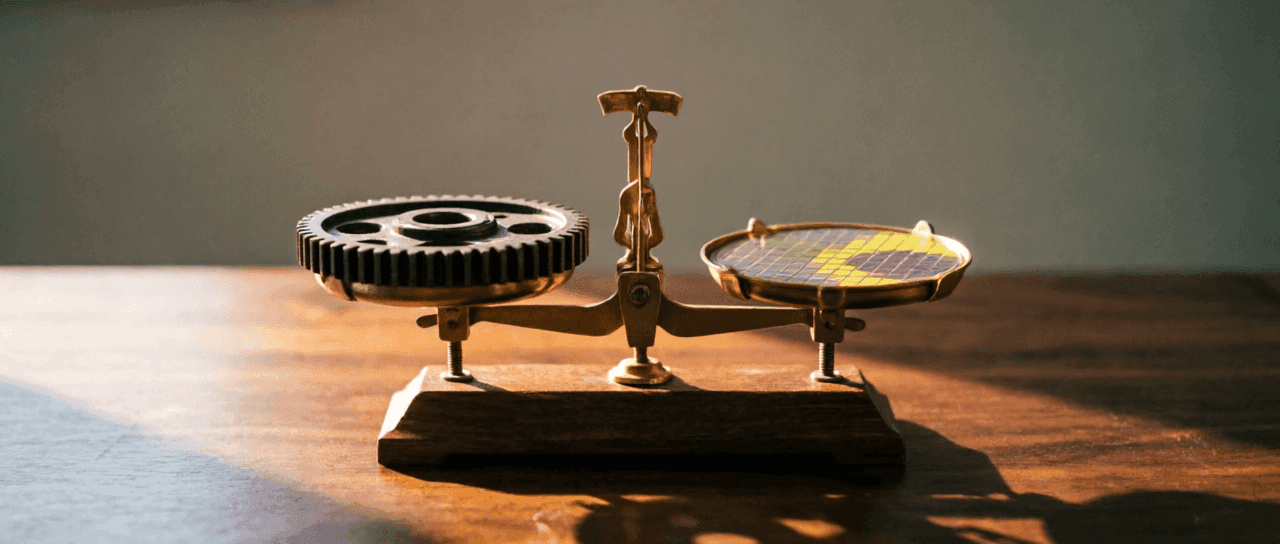
Concept illustration

Example illustration

Share Article

A Piece of Plastic Became the Most Hardcore Privacy Solution for AI Glasses | Flower Claw Lab