NVIDIA Acquires Kumo AI: From Gaming GPUs to Enterprise AI Predictions, What's Jensen Huang's Strategy?
NVIDIA acquires AI prediction startup Kumo AI, extending from gaming GPUs to enterprise AI services, signaling a shift from hardware dominance to prediction offerings.
The Graphics Giant's Goal: Why Buy a Prediction Company?
When you think of NVIDIA, gaming GPUs or AI training chips come to mind. But recently, this AI hardware titan quietly acquired a small startup founded just four years ago—Kumo AI. What does a business prediction AI company have to do with GPUs? Behind this is NVIDIA's strategic pivot from selling "shovels" to selling "treasure maps."
Acquisition Confirmed: NVIDIA Takes Over Kumo AI, Founders Join
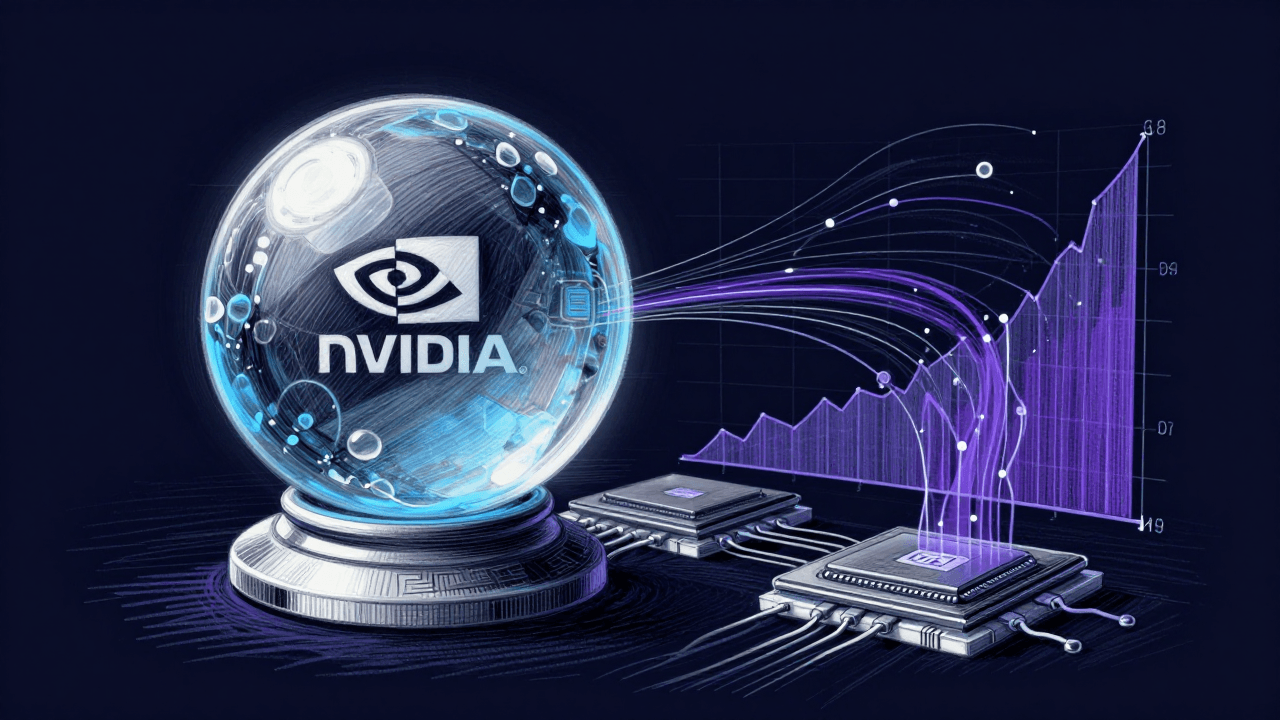
According to media reports cited by 36Kr, NVIDIA has acquired the startup Kumo AI, and its three co-founders—Vanja Josifovski, Hema Raghavan, and Jure Leskovec—joined NVIDIA last month. Kumo AI develops foundation models for accurate business predictions, such as customer churn and sales trends. The deal is small but carries a clear signal: NVIDIA is not satisfied with just hardware; it wants to directly participate in the enterprise AI application layer.
Simple Breakdown: What Does Kumo AI Do? Think of It as a Crystal Ball for Your Business
Imagine you run a chain of bubble tea shops. You monitor dozens of data points daily—which flavor is declining, which store has fewer visitors, how much stock to order next week. Traditionally, you rely on gut feeling or analyst spreadsheets. Kumo AI does this: feed your historical data into a "prediction model," and it automatically tells you—if tomorrow's temperature drops, sales of a certain hot drink will increase by 30%; if you run a promotion next month, foot traffic will rise by 15%.
More importantly, this model doesn't require machine learning or deep learning experts to tune parameters—ordinary business staff can use it. By acquiring Kumo AI, NVIDIA is essentially creating an "application outlet" for its massive GPU inventory: letting enterprise customers pay directly for prediction services, not just GPUs.
Impact on Ordinary People: What It Means for Professionals, Students, Creators, and Users
Professionals: If you're in operations, sales, or management, you might no longer need to manually analyze Excel in the future. NVIDIA could bundle Kumo AI into its enterprise services, making predictions as easy as using a calculator. The risk: if your job is purely data reporting, it could be replaced.
Students: AI learners now have a new direction—business prediction application development. NVIDIA's ecosystem will spawn more real-world scenarios, moving beyond pure theory.
Creators: Short-term impact is small, but in the long run, AI prediction might improve content recommendations and ad targeting, helping you reach audiences more precisely.
General Users: Ads and app notifications you see may become smarter. However, more companies will use your data for predictions, so privacy protection becomes more critical.
| Group | Benefits | Potential Risks | Recommended Actions |
|---|---|---|---|
| Professionals | Reduce repetitive work, improve decision-making efficiency | Some analysis roles replaced | Learn AI tools, transition to decision-makers |
| Students | Clearer commercial AI application direction | Tech-heavy learning may become outdated | Focus on application-layer practice |
| Creators | More precise audience insights | Algorithm dependency, creativity constrained by predictions | Combine unique creativity with data |
| General Users | Upgraded personalized services | Privacy leakage risk | Pay attention to data permission management |
Neutral View: Three Pros and Two Potential Risks of the Acquisition
Pros:
- Filling the application gap: NVIDIA's hardware is strong, but software and applications have been weak; Kumo AI can help build a closed loop from data to decision.
- Opening new markets: The enterprise prediction service market is huge, allowing NVIDIA to move beyond hardware cycle fluctuations.
- Locking in customers: Once enterprises use NVIDIA's prediction service, it's hard for them to switch to other GPUs.
Risks:
- Integration challenges: Small company culture may clash with a large corporation; if the core team leaves, the acquisition could be wasted.
- Privacy compliance: Business predictions involve sensitive data, and regulations are tightening globally; NVIDIA must handle data compliance carefully.
From Hardware to Ecosystem: NVIDIA's "Second Curve" Insight
NVIDIA's success is not just about technological leadership but also ecosystem building. From CUDA to data centers and now enterprise AI services, it has been finding "stickier applications" for its hardware. Acquiring Kumo AI is like adding a smart excavator to a gold mine—not only selling shovels but also contracting mining services. For other tech companies, this reminds us: before the technology dividend peaks, think about upgrading from a tool provider to a solution platform.
Interaction: What's Your Take on NVIDIA's Acquisition?
Would you let AI make business predictions for you? Or are you worried about data misuse? Feel free to share in the comments.