Nvidia's $3 Billion Power Play: Is Electricity the Ultimate Bottleneck for AI?
As tech giants cross over into power plant investments, the focus of AI competition is quietly shifting. Explore the energy ledger behind the compute boom and future trends, starting with Nvidia's massive bet on power infrastructure.

Why is a Chip Giant Crossing Over to "Buy Power"?
There is an interesting piece of news circulating in the tech world recently: according to three sources familiar with the matter, Nvidia, the leading AI chipmaker, has agreed to invest $2 billion in Lancium, a power infrastructure developer. If the company secures more planned power resources, Nvidia has committed to adding another $1 billion, bringing the total investment to up to $3 billion.
Who is Lancium? It is a Texas-based company providing power support for the AI campuses of OpenAI and Oracle.
What does this mean? In the past, we often thought AI competition was about who had the most chips or the best algorithms. But now, tech giants are stepping directly into the arena to secure electricity. The global AI industry's battle lines have extended from pure chip compute power to the most fundamental level: energy security.
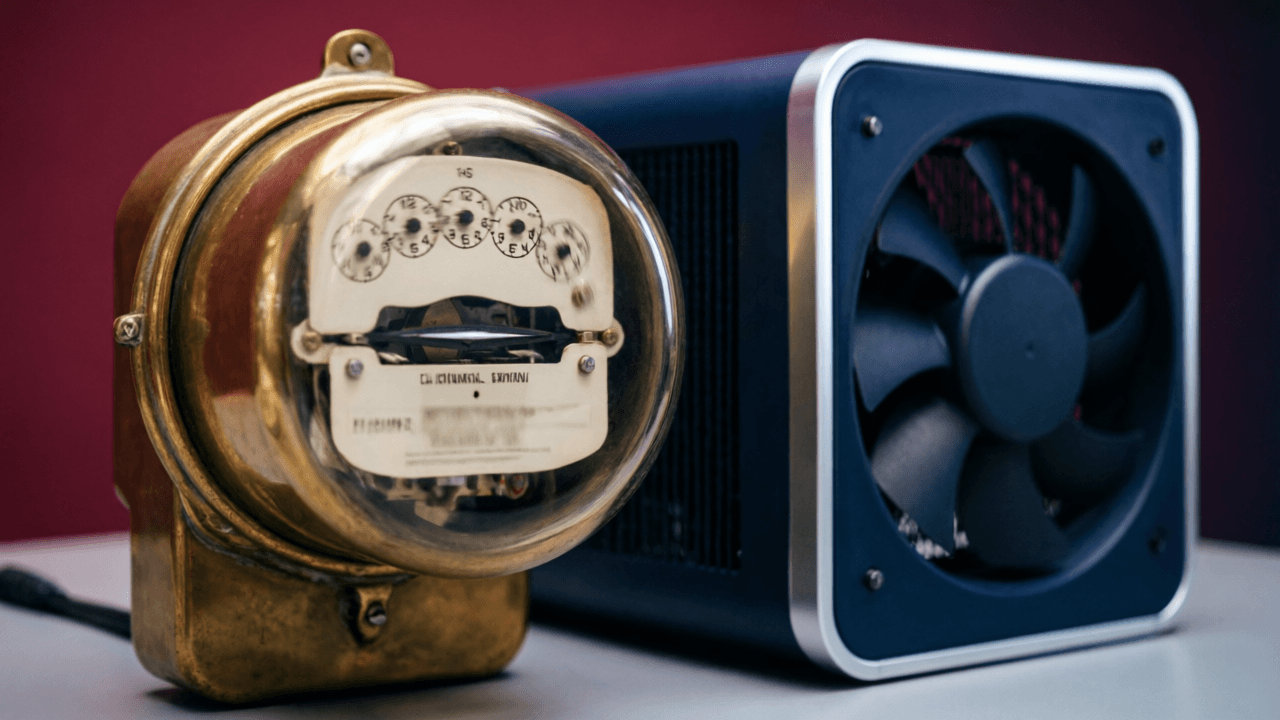
Just How "Power-Hungry" Are Large Language Models?
To understand the anxiety of these tech giants, we first need to look at how massive today's AI models are. For context, Alibaba (a major Chinese tech conglomerate) recently released its new flagship model, Qwen, with a total parameter count reaching 2.4 trillion. (Note: Qwen is one of the leading open-weight models globally, developed by China's Alibaba Cloud).
What are "parameters"? You can think of them as the number of "neurons" in an AI's brain. The more neurons, the smarter the AI, but the larger its "appetite" for resources.
Let's use a real-world scenario to feel the scale: when you type "help me write a weekly report" into a chat box and hit enter, thousands of GPUs in a remote data center instantly run at full capacity. This process is divided into "training" (teaching the AI) and "inference" (having the AI answer). Training is like building a massive university, while inference is like having tens of millions of students attending classes simultaneously every day. Both building the school and running daily classes require enormous amounts of electricity.
Simply put, as the parameter count of large models grows exponentially, the bottleneck in compute power is gradually shifting to an energy bottleneck. No matter how fast chips can compute, without enough electricity to run them, they are just expensive pieces of silicon.
Peak and Off-Peak Pricing: How AI Costs Are Passed On
The most direct consequence of power shortages is rising costs. This increase is already being reflected in the pricing of AI services.
For example, DeepSeek (a prominent Chinese AI research lab known for its highly efficient models) recently planned an overall increase in its API service pricing, with a significant expected hike. More notably, they have introduced a "peak and off-peak pricing mechanism"—API prices during peak hours are twice as high as during off-peak hours.
What is an "API"? Think of it as the ordering window at a restaurant; other software or developers use this window to "order" responses from the large model.
Looking at it from another angle, this is a very clear signal. In the future, our use of AI might face "off-peak" scheduling, much like residential electricity use today. For everyday users, if the software you use relies on these large models in the background, you might find that generating complex content during evening peak hours not only slows down, but the software might even charge you a higher "acceleration fee." The underlying energy costs of AI will ultimately be passed on to consumers in various forms.

Beware of "Power Absolutism" and Future Projections
Facing the industry consensus that "the ultimate bottleneck of AI is electricity," there is a lot of hype around related concepts in the market. But a word of caution is necessary here.
It is crucial not to fall into the trap of simple "power absolutism." Simply generating a lot of electricity does not mean it can perfectly support AI. AI data centers require extremely stable, uninterrupted, high-quality power, not fluctuating sources dependent on the weather. Grid dispatch capabilities, energy storage technologies, and liquid cooling systems are the true core barriers determining whether a region can become an "AI compute hub."
Extending this analogy, it is very similar to the Industrial Revolution of the 19th century. Coal was the core energy source back then, but the countries that ultimately won industrial dominance were not just those with coal mines, but those that first invented efficient steam engines and built comprehensive railway networks. Similarly, the future winners in AI competition will not just be companies that "have power," but those that maximize the efficiency of "converting power into compute."
Note: The industry trends and business logic mentioned in this article are for educational purposes only and do not constitute professional investment advice. Technological iterations (such as the development of low-power chips) may also change energy consumption expectations at any time.
How Should Everyday Users View and Respond?
As regular users, we don't need to worry about building power plants, but we can establish two clear understandings:
- Understand the "physical weight" of AI: AI is not some ethereal magic in the cloud; it is made of real steel, silicon, and electrical currents. Every tap on a screen consumes real planetary resources.
- View AI pricing rationally: High-quality AI services are unlikely to remain permanently free in the future. When you encounter price hikes for AI tools or the introduction of "peak-hour premium memberships," understand the energy cost logic behind them, choose according to your needs, and consume rationally.
One-sentence summary to share: Nvidia's $3 billion investment in a power company reveals a new truth in AI competition: behind the compute boom, you first need to ensure the power grid doesn't trip.
Discussion of the Day: If your favorite AI tool introduces an off-peak billing model—"half price at night, double during the day"—would you adjust your habits to save money, or would you rather pay for the convenience of using it anytime, anywhere? Share your thoughts in the comments!