Meta's $95 Billion Bet: How the AI Compute Arms Race Is Reshaping Daily Life
Meta is raising up to $95 billion to build out massive AI infrastructure. This isn't just a tech story—it's reshaping global supply chains, energy grids, and job markets. Here's what it means for everyday life.

What Does $95 Billion Actually Mean?
One of the biggest stories in tech right now: Meta announced plans to raise up to $95 billion specifically for artificial intelligence infrastructure and its push toward "superintelligence." That number is hard to wrap your head around—it rivals the entire annual GDP of many mid-sized countries.
The market reaction was mixed. Meta's stock dropped about 1.6% in early trading. Why does spending so much money hurt the stock price? Because investors worry this level of capital expenditure will squeeze future profits. Interestingly, chip giants like Nvidia, AMD, and Broadcom have signaled interest in buying up to $5 billion worth of Meta's stock—a move widely interpreted as a strategic alignment of interests.
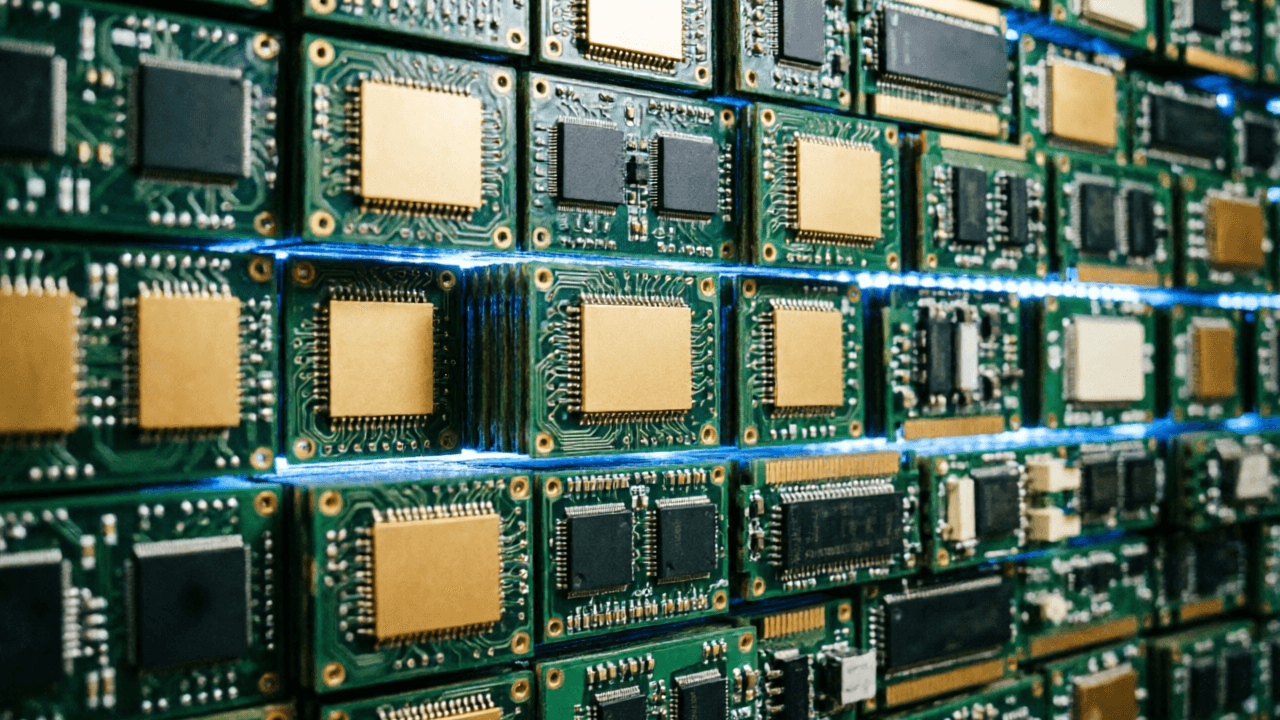
This isn't just a financial transaction; it's a signal that the global race for computing power is accelerating. Meta isn't buying a few servers—it's laying the digital foundation for the next decade of AI development. Whether you're using social media recommendation algorithms or interacting with an AI assistant, these systems rely on massive hardware clusters like the ones Meta is building.
Who's Paying for This Race?
It's easy to assume big tech companies are just burning their own cash, but the reality involves complex funding structures. When Meta raises this kind of capital, it increases the scale of bond or equity issuance, which can ripple through broader financial markets.
Other players in the supply chain are moving too. For example, Broadcom is reportedly partnering with institutions like Bank of America and Blackstone to create a $63 billion financing arrangement specifically to supply XPU (a type of custom AI accelerator) chips to Anthropic. This uses a "Special Purpose Vehicle" (SPV)—a legal structure that allows expensive AI hardware to be treated as a financeable asset rather than just a one-time purchase.
What does this mean for regular people? Electricity bills may rise, and land prices near data centers could increase. Training large AI models consumes enormous amounts of power—comparable to running hundreds of large factories simultaneously. As tech giants expand data centers, grid demand spikes, which can eventually show up in household energy costs. Additionally, data centers are often built in areas with abundant energy but sparse populations, which can shift local employment patterns and resource allocation.
| Dimension | Traditional IT Expansion | AI Infrastructure Expansion |
|---|---|---|
| Core Assets | Software licenses, labor | GPU/TPU chips, power, cooling systems |
| Capital Flow | R&D salaries | Chip procurement, data center construction |
| Social Impact | Internet adoption | Surging energy consumption, geopolitical supply chain tensions |
Workplace Impact: Microsoft's 'Voluntary Departure' Signal
If Meta's funding round is an offensive move, Microsoft's recent actions look defensive. Reports indicate Microsoft has offered voluntary separation packages to approximately 60,000 employees, citing cost reduction and restructuring for the AI era. Over a quarter of its workforce is eligible, spanning locations in the U.S., Canada, India, and the UK.
Viewed together, these events paint a clear picture: AI is fundamentally restructuring the cost model of tech companies. In the past, companies scaled by hiring more people. Now, they're willing to spend billions on compute power while reducing the need for entry-level engineers or operational staff. For professionals, this isn't simply a wave of layoffs—it's a divergence in "skill premiums." People who can master AI tools and manage complex systems will become more valuable, while roles involving repetitive cognitive tasks will face stiffer competition.
Avoiding the Hype: Don't Treat 'Superintelligence' as Magic
It's worth pushing back on media narratives that frame "superintelligence" as an imminent world-ending threat. Currently, "superintelligence" is largely a research goal, not a deployed product. Most of Meta's $95 billion will translate into concrete contracts for chips, server rooms, and electricity—not an instant magical solution.
Also, avoid overreacting to single events in the stock market. While Meta's stock fluctuated short-term, the investment cycle for AI infrastructure spans years. For individuals, there's no need to panic-sell stocks or hoard cash. However, it is wise to assess whether your industry falls into a "high automation risk" zone. If your work relies heavily on templated outputs, consider learning how to leverage AI for efficiency rather than just worrying about being replaced.

Conclusion
Meta's $95 billion raise marks the transition of AI from the "application layer" to the "infrastructure layer." It touches on chip supply chain stability, sustainable energy use, and how we'll work over the next decade. In this grand narrative, ordinary people are both consumers and participants.
Key Takeaway: In the rush of AI infrastructure development, the biggest advantage for individuals isn't predicting trends—it's becoming someone who can effectively wield new tools.
Discussion: In your current role, where do you already see AI changing efficiency or creating pressure? Share your specific experiences.