Back to articles
📁 AI news

Rockets Can Now 'Return': Behind the Long March 10B Maiden Flight, the Cost of Space Access Is Dropping

The successful maiden flight of China's Long March 10B marks the country's first controlled rocket recovery. Combined with a wave of commercial space IPOs, space transport is shifting from single-use to reusable—potentially reshaping the space economy over the next decade.

✍️Flower Claw Lab⏱️ 10 min read
Rockets Can Now 'Return': Behind the Long March 10B Maiden Flight, the Cost of Space Access Is Dropping

What Happened: Rockets Finally Learned to Come Home

The Long March 10B carrier rocket recently completed its maiden flight. This was no ordinary launch—it marked China's first successful controlled recovery of a carrier rocket. According to reports, at least 15 commercial space companies have initiated IPO processes, with firms like CAS Space and MinoSpace entering the inquiry stage on the STAR Market (China's Nasdaq-style board focused on hard-tech companies) in the first half of the year.

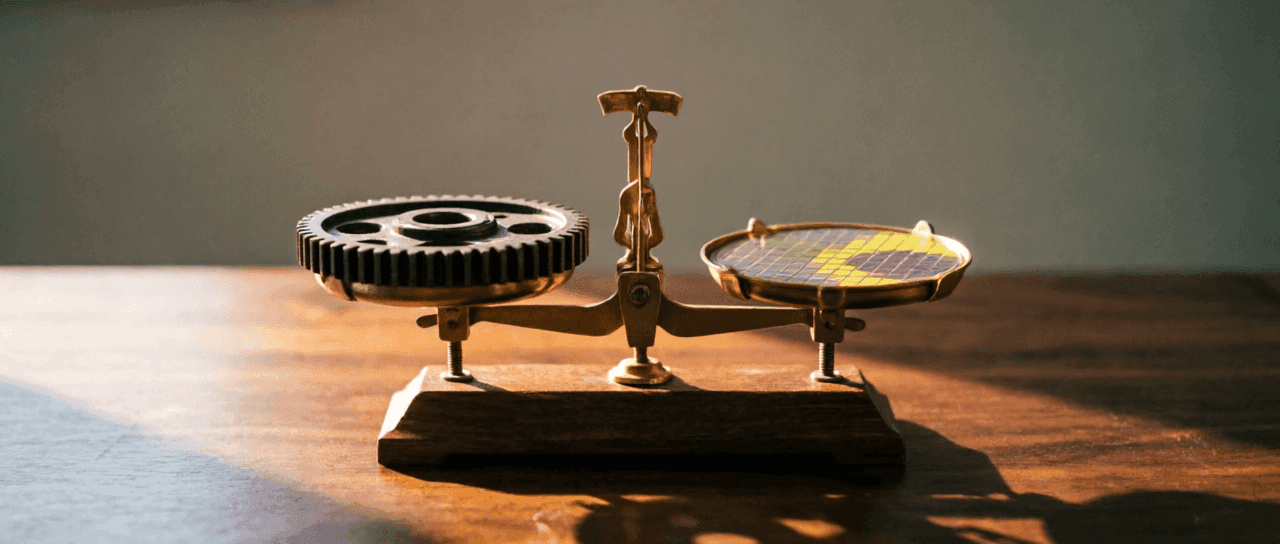
In simple terms, rockets have gone from being disposable chopsticks to reusable tableware.

For decades, launching a rocket was like setting off fireworks: precision equipment worth hundreds of millions of dollars would deliver its payload and then crash into the ocean or burn up in the atmosphere. The core of reusable rocket technology is enabling the first stage (the largest booster segment) to autonomously turn around, precisely decelerate, and land safely after completing its mission.

This may sound like science fiction, but SpaceX's Falcon 9 has been doing it for nearly a decade. Now Chinese teams have crossed this threshold as well. According to publicly available information, the Long March 10B employs innovative approaches such as "net-based recovery," which differs from SpaceX's landing leg system, but shares the same goal: driving down launch costs.

Rocket recovery concept illustration

Why It Matters to You: The 'Cost Revolution' Moment for the Space Economy

You might ask: What does rocket pricing have to do with my everyday life?

The connection is this: launch costs determine what services you can actually use.

Think of it this way: if shipping costs more than the product itself, e-commerce can't exist. Similarly, if the cost to send a kilogram into orbit runs tens of thousands of dollars, satellite internet, space tourism, and microgravity pharmaceuticals will remain nothing more than pitch decks.

What reusable rockets unlock is the commercial loop that shifts space industry from being driven by policy and capital to being driven by sustainable profitability. This means:

  • Satellite broadband could get cheaper: Low-Earth orbit constellations require batch launches; a 10% cost reduction could translate to a 10% drop in consumer pricing
  • Richer remote sensing data: Data sources for agricultural monitoring, disaster early warning, and urban planning will become denser and update faster
  • Lower barriers to space experiments: Universities and startups will be able to afford materials science or biology experiments in microgravity environments

From another angle, this is like container standardization for global trade—it doesn't directly change your life, but quietly reshapes the price tags on everything.

Technical Overview: How Rockets 'Brake' Their Way Home

There are three core challenges for reusable rockets, which can be compared to "skydiving plus precision parking":

ChallengeEveryday AnalogyEngineering Solution
Re-entry thermal protectionPulling iron from a furnace barehandedHeat shield tiles, active cooling
Attitude controlBalancing a broom upside downThrust vectoring + grid fins
Precision landingParallel parking blindfoldedNavigation algorithms + cushioning mechanisms

According to reports, Juli Sling (a Chinese rigging company) recently clarified market rumors that it was the "sole supplier of net-based recovery rigging," indicating that recovery solutions are still being explored through multiple approaches and the technical pathway has not yet fully converged.

This means the current "successful maiden flight" is more like a passing grade on an open-book exam, not the finish line. What still needs to be validated are hard metrics like number of reuses, refurbishment costs, and turnaround efficiency.

Why Capital Is Rushing In: The Logic Behind 15 Companies Queuing for IPOs

The resonance between technological breakthroughs and capital enthusiasm is no coincidence.

There are three driving forces behind this wave of commercial space IPOs:

  1. Technology validation window opens: A successful maiden flight reassures investors, shifting doubts from "can it be built?" to calculations of "how much can it earn?"
  2. Policy tailwinds: The STAR Market has increased its tolerance for hard-tech companies, and the inquiry-based listing system makes information disclosure more transparent
  3. Downstream demand surge: Satellite internet, low-altitude economy (a Chinese policy term encompassing drones, urban air mobility, and related services), and space manufacturing are moving from concepts to actual orders

But it's worth noting that a technology milestone is not the same as a commercial milestone. It took SpaceX nearly twenty years to become profitable, and it nearly went bankrupt multiple times along the way. Whether Chinese companies can complete the commercial loop before capital enthusiasm fades remains to be seen.

One way to read this: fewer than a third of these IPO-bound companies may ultimately survive. Much like the bike-sharing wars of the 2010s, technological capability is just the entry ticket—operational efficiency and cash flow are what determine survival.

Broader View: The 'Three-Way Race' in Global Commercial Space

Zooming out, the global commercial space landscape is taking shape with three main blocs:

  • United States: SpaceX leads by a wide margin, with Blue Origin and Rocket Lab following; the most mature ecosystem overall
  • China: State-owned and private-sector teams advancing in parallel; a complete supply chain but relatively shallow commercialization experience
  • Europe/India: Ariane 6, SSLV, and other vehicles are catching up, with advantages in regional markets

If China's reusable rockets achieve routine reuse within the next 3–5 years, the global launch market's pricing structure will be rewritten. This is not just commercial competition—it also concerns the allocation of future space resources: orbital slots, spectrum rights, and lunar water ice are all first-come, first-served.

What Everyday Readers Should Know

For general readers, the advice is:

Stay informed, but participate cautiously. Commercial space is a long-cycle sector, and short-term stock price swings can be dramatic. If you're considering investing in related stocks or funds, make sure to verify whether companies have real orders and cash flow, rather than buying into hype around a "successful maiden flight."

For industry professionals or job seekers, this sector is transitioning from the "lab phase" to the "factory phase," meaning job demand will expand from R&D engineers to a broader range of technical roles in manufacturing, testing, and operations.

A word of caution: Recently, some market actors have been hyping individual stocks using buzzwords like "space-grade" or "sole supplier." Juli Sling has issued a clarification statement, reminding investors to verify information and not be swayed by social media speculation.


One-sentence takeaway to share: Rockets have learned to come home, and the cost of space transport is being rewritten—but the commercial loop still needs time to prove itself.

Discussion prompt: If satellite broadband pricing dropped to roughly the same as home fiber internet, would you consider using it to replace your current ground-based connection? What use case excites you most?

Share Article

Rockets Can Now 'Return': Behind the Long March 10B Maiden Flight, the Cost of Space Access Is Dropping | Flower Claw Lab