Back to articles
📁 AI news

First Neuromorphic Chip Based on Phase-Change Memristors: A 'Silicon Twin' for Your Brain?

A joint team from Peking University and the Chinese Academy of Sciences has unveiled the world's first neuromorphic dynamics chip based on phase-change memristors, achieving a single-step latency of 2.12 milliseconds — 50 to 478 times faster than GPUs. How does it mimic the brain, and how close is it to everyday use?

✍️Flower Claw Lab⏱️ 12 min read
First Neuromorphic Chip Based on Phase-Change Memristors: A 'Silicon Twin' for Your Brain?

What Happened: A Chip That 'Thinks'

A research team led by Yang Yuchao at Peking University's School of Integrated Circuits, in collaboration with Song Zhitang's team at the Shanghai Institute of Microsystem and Information Technology (a lab under the Chinese Academy of Sciences, China's top state-run research institution), has successfully developed what is reported to be the world's first neuromorphic dynamics system chip based on phase-change memristors.

That's a mouthful. Let's break it down.

Neuromorphic dynamics, in plain terms, uses mathematical models to simulate how brain neurons "fire" and "transmit signals." The human brain contains roughly 86 billion neurons that communicate via electrical signals, giving rise to thought, memory, and reflexes. Scientists have long tried to replicate this process in computers, but traditional chips are too slow — real-time brain simulation has been a bottleneck for half a century.

What is a phase-change memristor? Think of it as a "micro-switch," but instead of a simple on/off toggle, it can smoothly transition between different resistance states — much like how a neuron's synapse adjusts signal strength. The device uses special materials (typically chalcogenide compounds) that switch between crystalline and amorphous phases to store information, retaining its state even when power is cut.

The headline numbers from this breakthrough are striking: the chip compresses the single-step latency of complex neuromorphic computations to 2.12 milliseconds, achieving a 50× to 478× speedup over state-of-the-art GPUs in tasks like cortical reconstruction. In practical terms, brain-simulation workloads that once required large server clusters running for extended periods can now be handled in real time on a single chip.

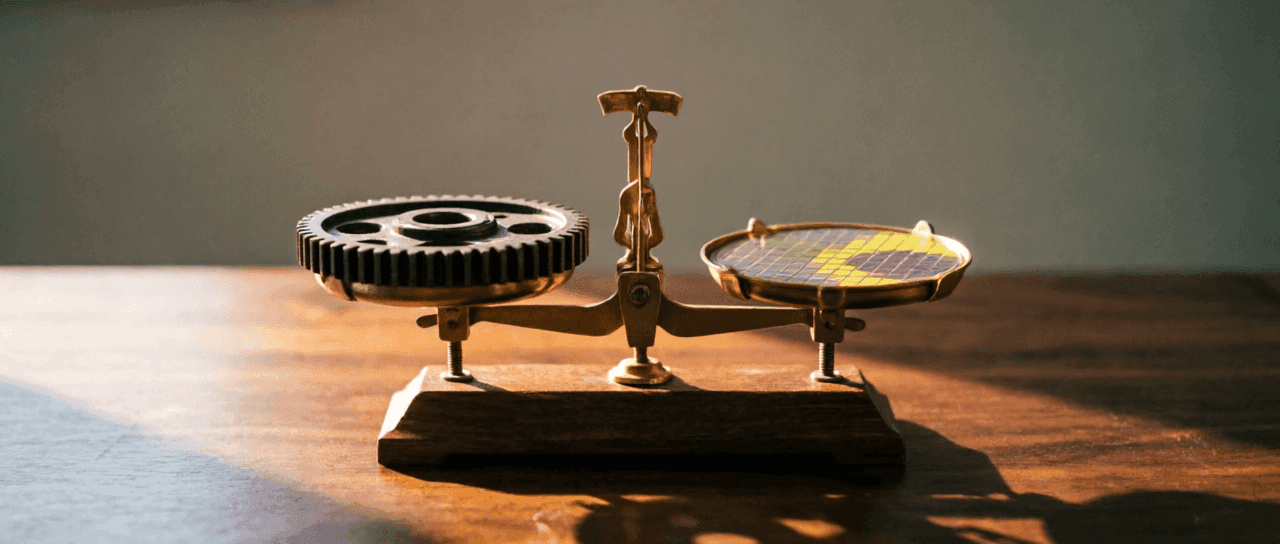
Conceptual diagram

How It Differs from Traditional Chips: Two Ways of 'Computing'

To understand why this chip is special, we need to look at the chips in your everyday devices.

Most conventional chips are built on the von Neumann architecture — where the processor and memory are separate. Imagine cooking in a kitchen: the fridge (memory) stores ingredients, and the stove (processor) does the cooking. You constantly run back and forth between the two. Moving data around consumes significant time and energy — a problem known as the "memory wall."

Neuromorphic computing takes a different approach: it merges "storage" and "computation" into one. A memristor can both store data and perform calculations, much like your brain — neurons themselves are "in-memory compute" units, so there's no need to shuttle memories from one place to another for processing.

ComparisonTraditional GPU/CPUNeuromorphic Chip (Phase-Change Memristor)
ArchitectureSeparate memory & compute (von Neumann)In-memory computing
Energy useHigh (heavy data movement)Low (compute in place)
Best atPrecise numerical computation, graphics renderingPattern recognition, temporal signal processing
Brain simulationSoftware-based emulation — slow and power-hungryHardware-level physical similarity

In short, traditional chips simulate the brain with "brute force," while neuromorphic chips are physically structured to resemble it. The Peking University team's breakthrough is the first time this physical resemblance has been leveraged on phase-change memristors to achieve high-precision, real-time neuromorphic dynamics simulation.

The Global Race: China Isn't Alone in Building a 'Silicon Brain'

Neuromorphic chips are not a new concept. Global tech giants have been on this track for over a decade.

Intel's Loihi series is a flagship example. Loihi 2, released in 2024 on an 18nm process, integrates about 1 million "artificial neurons" and follows a digital circuit approach — using conventional silicon fabrication to "build" neuron models.

IBM's TrueNorth came earlier, debuting in 2014 to great fanfare as a "million-neuron chip" with a power draw of just 70 milliwatts — roughly what a hearing-aid battery can supply.

By contrast, the Peking University team pursued a "device-level" approach: rather than assembling neuron behavior out of traditional transistors, they exploit the intrinsic physical properties of phase-change materials so that the devices naturally exhibit neuron-like dynamic behavior.

One way to think about it: the digital route is like building a castle out of LEGO bricks — each brick is standardized. The device-level route is like sculpting with clay — the material itself is malleable. The latter has inherent advantages in energy efficiency and biological fidelity, but it also poses greater engineering challenges: material consistency, device lifespan, and yield at scale are all open problems.

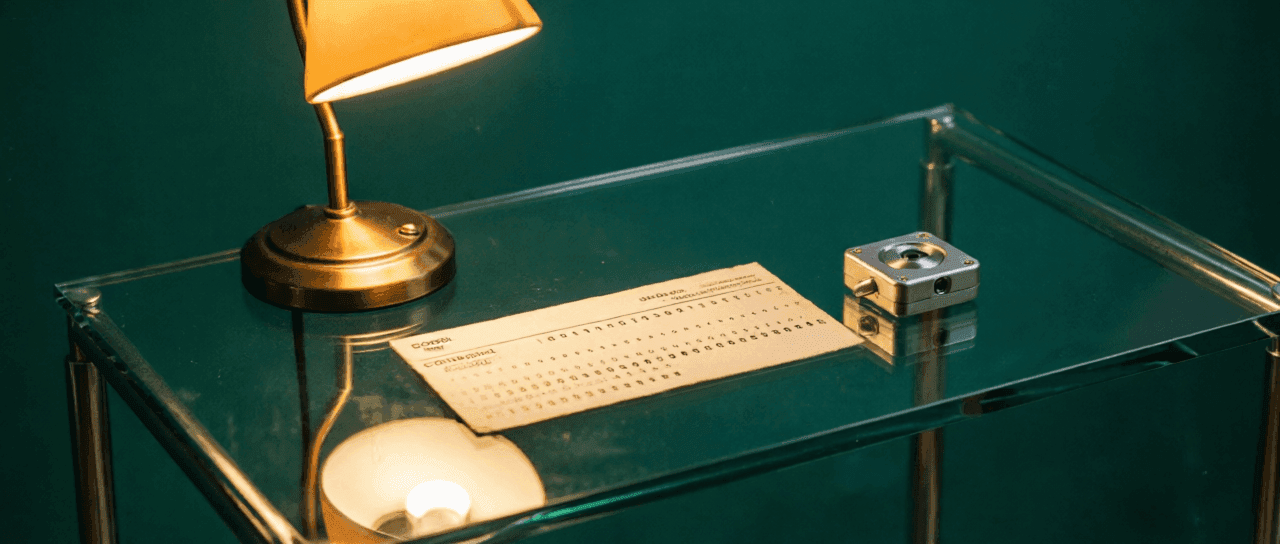
Principle diagram

What Does This Mean for Everyday People?

You might wonder: what does a lab chip have to do with me?

In the short term, it won't show up in your phone or laptop. But over a 5- to 10-year horizon, this technology could impact several areas that touch your life directly:

Brain-computer interfaces (BCIs). Current BCI devices — such as systems that help paralyzed patients control robotic arms — must process massive streams of neural signals, yet are limited by chip performance and power budgets to only "rough interpretations." With real-time neuromorphic chips, BCIs could evolve from "reading a few commands" to "understanding complex intent," which would be transformative for patients with ALS, spinal cord injuries, and similar conditions.

Edge AI and wearables. The smartwatch on your wrist wants to do real-time health monitoring, but battery life and compute power are limiting factors. The ultra-low-power nature of neuromorphic chips could allow watches, hearing aids, and smart glasses to run complex AI inference locally, without relying on the cloud for every task — saving energy and protecting privacy.

Drug discovery and neuroscience. Real-time simulation of cortical activity can help scientists more quickly understand the mechanisms behind Alzheimer's, epilepsy, and other brain disorders, accelerating drug screening.

That said, these applications remain in the realm of "possible," not "imminent." The road from lab prototype to mass-produced product is long and fraught with engineering hurdles.

Points of Caution

First, don't get swept up by "world's first." Being first signals pioneering work, but it also means the technology is still early. The 2.12 ms latency and 50–478× speedup figures were measured on a specific task (cortical reconstruction) and cannot be generalized to all AI workloads. For general-purpose computing and large language model inference, traditional GPUs remain the dominant workhorse.

Second, "brain-like" does not mean "as smart as a human." These chips simulate the electrical dynamics of neurons, not consciousness or reasoning. They excel at temporal pattern recognition, low-power signal processing, and similar specialized tasks — a far cry from artificial general intelligence. If hype-driven outlets frame this as "the dawn of AI awakening," stay skeptical.

Finally, the path to commercialization remains uncertain. Material stability of phase-change memristors, yield at mass-production scale, and compatibility with existing semiconductor fabrication processes are all core concerns for industry. While the team has reportedly achieved chip-level integration, every step from chip to system to product is a potential "valley of death."

Broader Perspective: From the Lab to Your Wrist

Historically, a foundational hardware technology typically takes 10 to 20 years to go from academic paper to everyday impact. Flash memory, invented in the 1980s, took nearly two decades to replace mechanical hard drives and find its way into every smartphone. GPUs, born in 1999, waited 15 years before deep learning propelled them into the mainstream.

If phase-change memristor technology can successfully cross the engineering gap, it will likely land first in medical devices (such as implantable BCIs) and industrial sensors (such as low-power edge detection), then gradually渗透ate into consumer electronics.

What's arguably more noteworthy than this single chip is the trend it represents: computing is moving from "simulating the brain" to "physically becoming the brain." When hardware is no longer just a tool that executes software instructions but instead intrinsically possesses biological-like dynamic properties, the boundary between humans and machines may quietly shift.


One-line takeaway to share: A Chinese research team has built the world's first phase-change memristor neuromorphic chip — up to 478× faster than GPUs — but it's still a long way from ending up in your phone.

We'd love to hear your thoughts: If brain-computer interface technology matures, what problem would you most want it to solve for you — health monitoring, disease treatment, or something else entirely? Let us know in the comments.

Share Article

First Neuromorphic Chip Based on Phase-Change Memristors: A 'Silicon Twin' for Your Brain? | Flower Claw Lab