Back to articles
📁 AI news

Embodied AI Stuck on 'Blurry Vision'? Ant Group's LingBot Launches a New Pair of Glasses

Ant Group's LingBot unit released two spatial perception models on the same day, aiming to upgrade robots from 'looking at photos' to 'seeing the world.' This is not just a technical iteration — it's a critical step toward moving embodied AI out of the lab and into real-world environments.

✍️Flower Claw Lab⏱️ 10 min read
Embodied AI Stuck on 'Blurry Vision'? Ant Group's LingBot Launches a New Pair of Glasses

Have you ever wondered why robot vacuums always bump into table legs? Or why robots that do backflips in videos become clumsy the moment they enter a real room? The truth is, it's not that they aren't "smart" enough — it's that they simply can't "see" the world clearly. A human can glance and instantly know a cup is on the table or a chair is two steps away. But for robots, reconstructing a 3D physical world from 2D images remains a core technical bottleneck to this day.

On July 7, Ant Group's LingBot unit — the robotics and embodied AI research arm of Ant Group (the fintech giant behind Alipay, China's dominant mobile payment platform) — reportedly released two spatial perception models on the same day: LingBot-Vision and LingBot-Depth 2.0. The former targets 3D environmental understanding; the latter improves distance and structural judgment. This is not a routine update. In my view, it attempts to simultaneously address two layers of the problem: "understanding what the scene is" and "calculating exactly where things are."

From 'Looking at Photos' to 'Seeing the World' — It's More Than Just One Extra Dimension

Let's start with LingBot-Vision. Its key concept, according to reports, is "spatially native." What does that mean? Many existing robot vision models are essentially "transferred" from smartphone photography and image recognition pipelines. They first learn to identify "this is a photo of a cat" or "that is a car," and then attempt to force that 2D understanding into 3D scenarios. It's like asking someone who has only ever studied a paper map to navigate real terrain — they know the street names, but have no idea which hill is steep or which curve is sharp.

"Spatially native" means the model is trained directly on 3D physical environments from the very beginning — not learning 2D first and then guessing 3D, but learning within three-dimensional space from the start. This gives the model a more "intuitive" grasp of depth, occlusion, and spatial relationships between objects.

Put simply, this is a new answer to an old question in embodied AI: should a robot's eyes work like a camera, or like human eyes? A camera records flat, planar information. Human eyes perceive volumetric space. LingBot-Vision takes the latter path. For everyday users, this means future robots won't be "looking at an image and guessing" — they will "directly perceive the 3D structure of your living room." The robot will know that the gap between your sofa and coffee table is only wide enough to squeeze through sideways, rather than bumping into it every time to learn by trial and error.

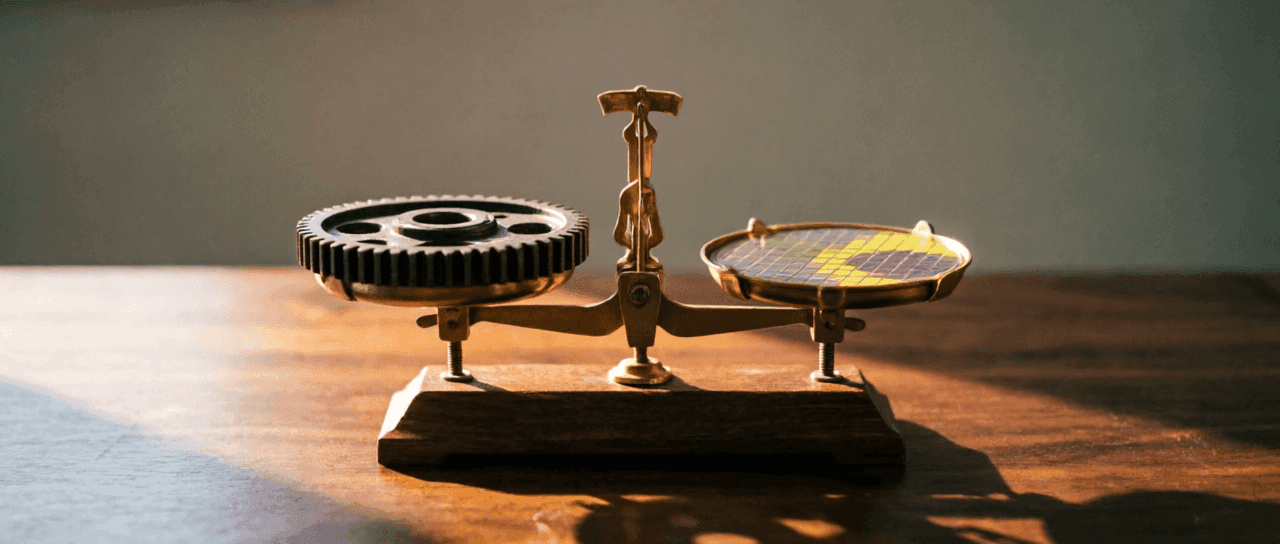
Conceptual illustration

Depth Estimation: Perfect Scores in the Lab, Failing Grades in the Real World

Now let's look at LingBot-Depth 2.0. This is an iterated version of a depth perception model, aimed at improving judgment of physical distances and structures. You might ask: isn't depth estimation just calculating "how far away is that thing"? How hard can that be?

In fact, it's one of the trickiest challenges in robot vision. In a lab, with even lighting and clean backgrounds, depth estimation can produce beautiful results. But the real world is not a lab — a cat darts across the hallway, irregularly shaped cardboard boxes pile up on warehouse shelves, a water glass and cutting board crowd together on a kitchen counter, sunlight slants through a window casting large shadows… every "surprise" can throw depth estimation off.

Consider an example: you ask a robot to fetch a water bottle from the kitchen. It needs to avoid slippers on the floor (depth perception), identify the water bottle inside the fridge rather than the milk carton (visual understanding), and finally grip the bottle firmly without crushing it (depth + force control coordination). If the depth calculation is wrong, it might reach out and grab air, or crash into a wall while navigating.

Notably, LingBot-Depth has already iterated to version 2.0, which itself signals that depth estimation in real-world scenarios still faces ongoing challenges in accuracy and generalization. Problems that version 1.0 couldn't fully solve are still being tackled in 2.0. This is not something that gets fixed overnight — it's a sustained effort. Seen from another angle, this also means: whoever breaks through first in depth estimation may secure an "entry ticket" in the embodied AI race.

Why Release Both Models at the Same Time?

In my view, the most interesting aspect of this launch is not any single model, but the fact that they were released simultaneously. Think of it this way: LingBot-Vision is like the robot's "visual cortex," responsible for understanding "what scene am I looking at"; LingBot-Depth 2.0 is like a "depth sensor," responsible for calculating "how far away is each object." The former gives you semantic understanding; the latter gives you geometric precision.

With only the former, a robot knows there's a table in front of it, but doesn't know where the table edge is. With only the latter, it knows there's an obstacle 1.2 meters ahead, but doesn't know whether it's a table or a chair. Together, the two models reportedly form an "eyes + brain" combination for spatial understanding.

This combined approach points to a broader trend: spatial perception in embodied AI is shifting from "single-point breakthroughs" to "system-level integration." This mirrors the early evolution of autonomous driving — at first, people thought a single LiDAR unit was enough, then realized cameras, millimeter-wave radar, and high-definition maps were also needed, and ultimately discovered that all of these had to be fused together. Robot spatial perception may be following the same path. If such "combined models" become the industry standard in the future, teams still relying on a single sensor or a single model may face the risk of being sidelined.

Example illustration

From Slide Decks to Living Rooms — How Many Steps Remain?

Embodied AI is widely regarded by industry observers as one of the hottest AI deployment frontiers of 2026. But between "hot" and "useful" lies precisely this hurdle of spatial perception. If spatially native vision and depth perception models can be validated in real-world deployment, we may be one step closer to robots that work reliably in homes, warehouses, and factories.

Of course, a model launch is only the starting point. Whether these models can run stably across endlessly variable real-world scenarios, and whether they can achieve low enough latency and high enough reliability, remains to be seen. But at the very least, the direction these "eyes" are pointing seems right.

Key takeaway: A robot's intelligence depends not just on how smart its brain is, but on how accurately its eyes can see — spatial perception is the real threshold for embodied AI to move from slide decks into your living room.

Share Article

Embodied AI Stuck on 'Blurry Vision'? Ant Group's LingBot Launches a New Pair of Glasses | Flower Claw Lab