Why BBC's 'Blue Planet III' Is Deliberately Blurry: A Trust Strategy Against AI
As AI can generate perfect deep-sea footage, the BBC is choosing to keep water spots and noise in its cameras. This isn't a technical failure; it's a strategic move to prove authenticity by embracing physical imperfections.
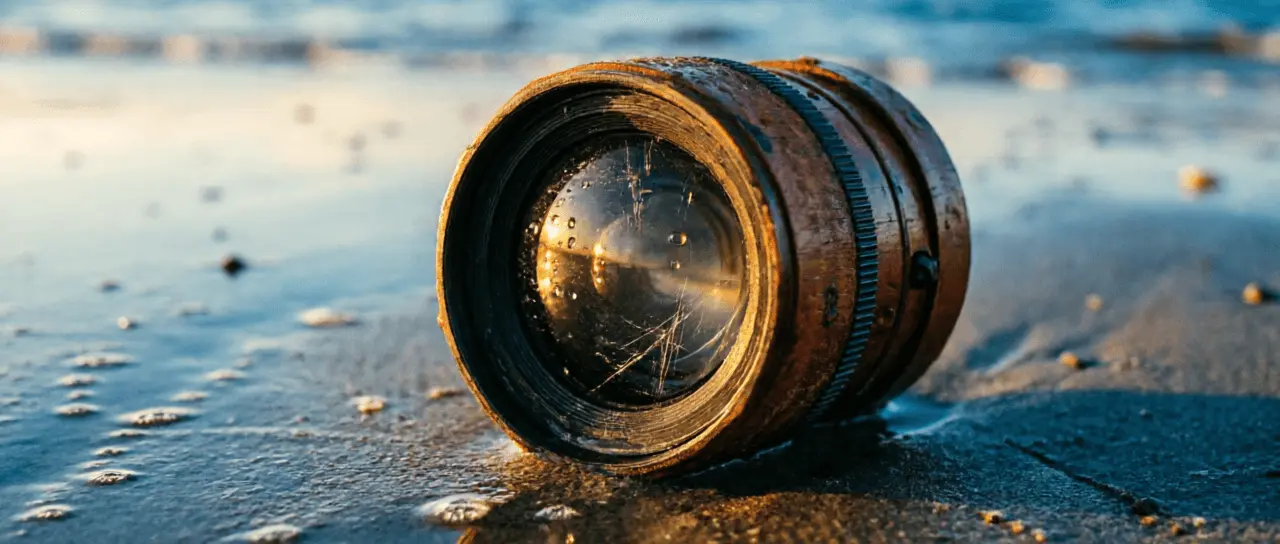
Recently, many viewers have noticed that some deep-sea videos look unnaturally perfect. The lighting is too even, the fish scales reflect light with suspicious uniformity, and even the bubbles pop with an algorithmically smooth rhythm. This excessive perfection can be unsettling: is this real footage, or was it generated by AI?
In October 2026, the BBC announced that its flagship documentary series, Blue Planet III, will intentionally retain the "rough edges" of its filming process. By "rough," they mean water spots on the lens, occasional out-of-focus clouds of marine snow, and grain caused by low light. According to reports from The Guardian, this is a strategic decision: using the uncontrollable nature of the physical world to prove that the content is real, not synthesized.
Put simply, in the past, "high definition" represented professionalism. Now, "having flaws" represents truth. The power structure of visual language has shifted. We used to crave god's-eye-view clarity and grandeur; now, we subconsciously look for the glitches that machines can't replicate. AI excels at smoothness, symmetry, and high saturation, while the real world is full of chaos, occlusion, and non-linear movement.
Turning "Glitches" into "Watermarks"
From another perspective, the BBC is leveraging viewer anxiety. When audiences can no longer easily distinguish between real and fake, they need an anchor. That anchor is not resolution, but "uncontrollability."
One interpretation is that the BBC hasn't become lazy or suffered from equipment degradation. Instead, they are engaging in carefully designed "trust marketing." Much like handmade leather goods that deliberately preserve natural textures, Blue Planet III retains the physical limitations of underwater photography—water current interference, fluctuating visibility, and compositional imbalances caused by wildlife suddenly entering the frame.
This is a clever defensive strategy. If every shot looked as perfect as a movie poster, the audience's first reaction would shift from "Wow, how beautiful" to "Is this CGI?" In this context, "flaws" are no longer errors to be eliminated; they are the "fingerprints" proving that a photographer was actually present in that cold, dark, and uncertain deep-sea environment.
However, there is a risk of new aesthetic fatigue: could future AI plugins specifically simulate "fake flaws"? If even "blur" can be perfectly simulated, where does the boundary of reality lie? It remains to be seen, but for now, the randomness of the physical world is the hardest barrier for AI to fully replicate.

From "Watching" to "Verifying"
For general viewers, you don't need to be an image forensics expert, but building an "intuition for suspicion" is necessary. Next time you see stunning nature footage, ask yourself two questions: Is the dynamic range of the image too uniform? Does the behavior of the animals align with biological common sense (for example, do the fish's swimming trajectories show slight hesitation or correction)? If everything looks like a polished commercial, keeping a bit of distance might be safer.
Furthermore, focusing on the source is more important than focusing on image quality. Institutions like the BBC, which have long-term field teams and public behind-the-scenes material, provide context for their "roughness." On the other hand, ultra-clear deep-sea videos posted by anonymous accounts, without specific shooting times, locations, or equipment parameters, deserve a question mark no matter how clear they appear.
Looking beyond nature documentaries, this issue extends to news photography and even medical imaging. As synthesis technology becomes more realistic, society's trust cost for "raw data" will rise sharply. The approach taken by Blue Planet III is a microcosm of the entire content industry exploring new mechanisms of trust.
Key Takeaway
In an era where AI can easily create perfection, moderate imperfection has become the highest form of proof of authenticity. Next time you see a video with noise or slight focus issues, don't scroll away immediately—it might be the last stubborn sign that it came from the real world.
Shareable Summary: In the age of AI, the BBC's Blue Planet III deliberately keeps visual flaws, using "imperfection" to prove "real existence."
Discussion: What detail made you recently feel a video was "too fake to believe"? Was it the lighting being too perfect, or the movements too smooth? Share your experience spotting fakes below.
