When AI Takes Over the Lab: Lowering Barriers, Safety Blind Spots, and the Silence of Science Journalism
AI for Science is lowering the barrier to scientific research to simple natural language conversations. However, the resulting safety blind spots and the disconnect in science communication are the real 'last mile' challenges that need addressing.
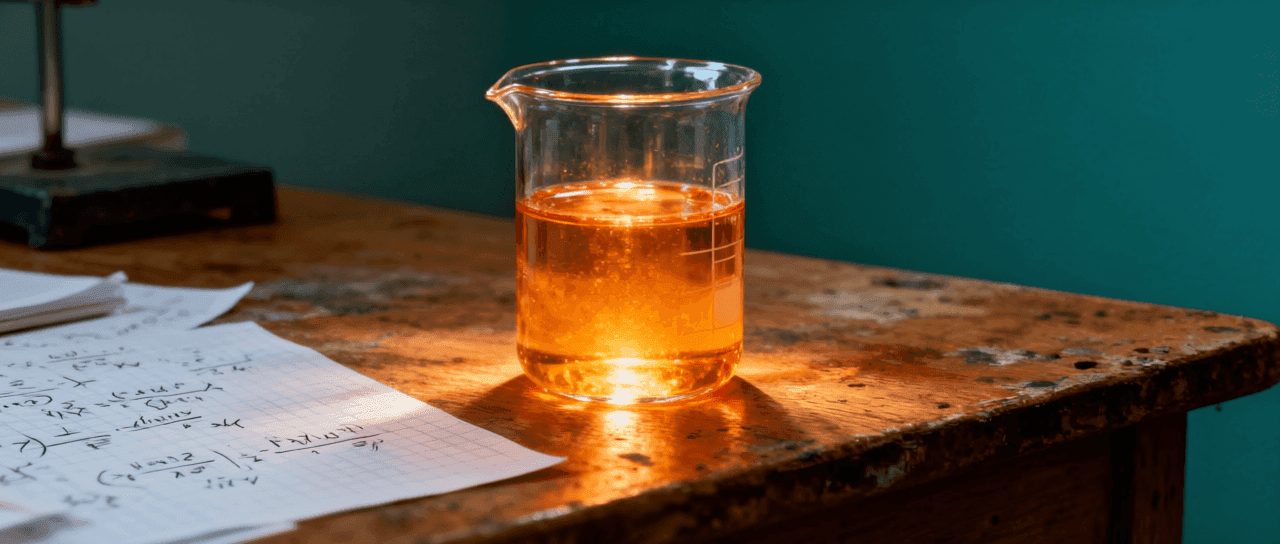
Recently, a research team based in Hangzhou, China—a major technology hub—was publicly recognized by Nvidia for its advancements in AI for Science. The capabilities they demonstrated sound like science fiction: researchers no longer need to write complex code to simulate molecular structures. Instead, they can simply describe their needs in natural language, turning an idea into a result in a single conversation. As large language models flatten the barriers to entry in laboratories, how should we navigate this rapid advancement?
From Coding to "Ordering Takeout": Drastically Lowering the Barrier to Research
While "AI for Science" may sound highly complex, its workflow is being reshaped into three clear steps. First, researchers propose hypotheses and requirements using natural language. Second, the AI orchestrates massive computing power in the background to simulate and validate vast numbers of molecular structures. Third, it directly outputs viable synthesis pathways or material formulas.
To put it simply, this is akin to using a voice assistant on your phone to order takeout, rather than going into the kitchen to write code for a cooking robot. You provide the hypothesis, and the AI handles the complex calculations and execution. This means that future materials scientists might act more like product managers: they set the direction and ask the right questions, while the AI runs the tedious validation processes in the background. For the general public, this shift implies that the development cycles for new drugs or novel solid-state battery materials could be significantly compressed, leading to faster access to cheaper and more durable consumer electronics.
Creation and Restoration: The Two Faces of AI in Fundamental Sciences
Currently, the application of AI in the scientific community has revealed two distinct paths. One is "creation" from scratch, as seen with the aforementioned Hangzhou team using large models to directly generate synthesis pathways for new materials. The other is "restoration" through meticulous analysis. For instance, a materials science team at Rice University recently used similar AI techniques to uncover the hidden history of artifacts at the Menil Collection. Through deep analysis of material data by AI, underlying sketches or signs of material aging invisible to the naked eye were restored.
Imagine a specific scenario: a researcher in a lab says to a screen, "Help me optimize the heat resistance of this catalyst," and the AI instantly provides three solutions. From another perspective, whether creating new substances or analyzing old artifacts, AI is taking over the most time-consuming trial-and-error phases. The barrier to scientific research is shifting from "mastering programming languages" to "asking precise questions," fundamentally altering the operational logic of fundamental sciences.
Hidden Reefs Behind the Boom: When AI "Hallucinations" Meet Chemical Reactions
However, as AI begins to take over computing tasks in laboratories, the associated risks are also magnified. At the recent Dreamforce conference, AI safety emerged as a new battleground for major tech companies.
A critical concern arises when a "single conversation" can generate the synthesis pathway for a new compound: if the model hallucinates and provides a formula that is toxic or explosive, who is held responsible? The tolerance for error in scientific fields is far lower than in writing a poem or generating an image.
The so-called "last mile" that AI for Science needs to bridge is not just a technological loop, but a loop of accountability. Without strict safety guardrails, "pseudoscientific" data generated by AI could contaminate the entire academic knowledge base. Consider this: if a paper containing incorrect molecular structures generated by AI is published, and subsequent AI models are trained on this paper, it creates a vicious cycle of "data poisoning." While these second-order effects remain to be fully observed, they must be preemptively addressed before the technology becomes ubiquitous.
The Communication Gap: Scientific Discoveries Outpacing Journalists
Technology is moving too fast, and science communication is falling behind. Nieman Lab recently published an article discussing whether science journalism is dying, comparing the current situation to the "science collapse" period 40 years ago caused by funding cuts. However, today's dilemma is fundamentally different: the speed at which AI generates scientific results far exceeds the capacity of human media to digest them.
When the Hangzhou team uses AI to produce experimental results in minutes, traditional science journalists may not even have the background knowledge required to understand those results. Faced with screens full of parameters and the black-box logic of AI, reporters attempting to cover such breakthroughs often find themselves at a loss for words. This indicates that the channels through which the public accesses cutting-edge scientific information are fracturing and being reconstructed. In the future, we may need a new role: the "AI Science Translator," dedicated to converting the outputs of large models into common knowledge that humans can understand. This translation is not merely linguistic; it is a simplification of logic. Only when the black box becomes transparent can scientific discoveries truly translate into social consensus.
Key Takeaway
AI for Science is lowering the barrier to scientific research to simple natural language conversations. However, the resulting safety guardrails and the disconnect in science communication are the real "last mile" challenges that need addressing.
Join the Discussion
If your industry has also started using AI to directly generate professional solutions (such as code, formulas, or design blueprints), do you think the biggest risk right now is "AI making mistakes" or "humans not understanding why it does what it does"?

