When AI Looks to the Stars: What It Means as Telescopes Learn to Observe Autonomously
Telescopes are no longer just humanity's eyes—they are growing brains. As AI takes over astronomical observations, fundamental science is experiencing a paradigm shift from assisted analysis to autonomous decision-making.
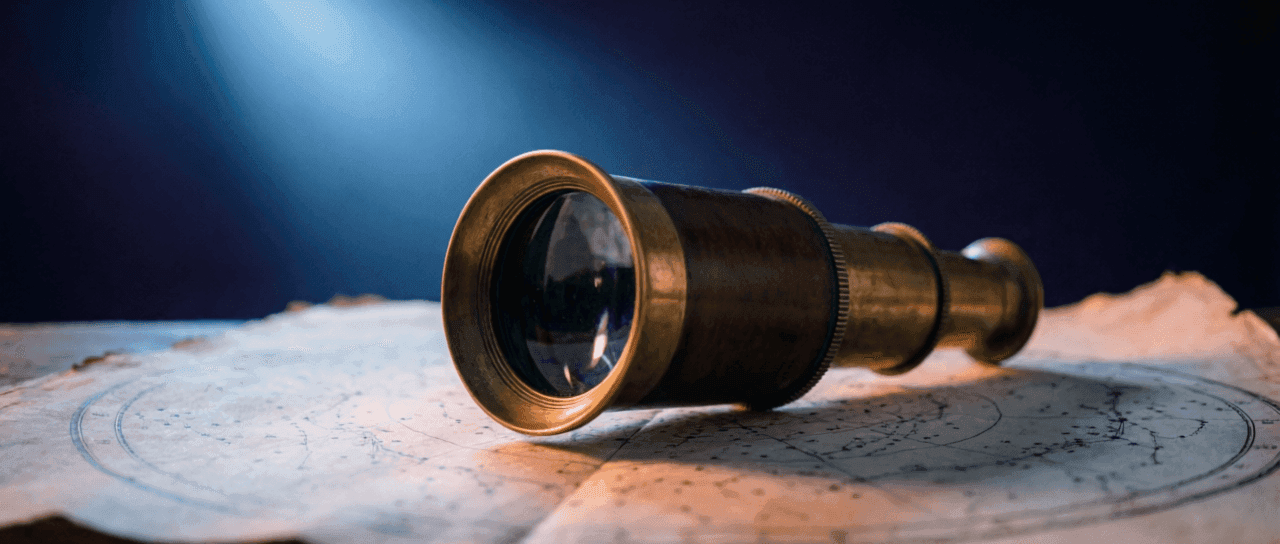
According to an August 1 report by Phys.org, a team of scientists from Northwestern University, the University of Chicago, and Fermilab has developed an artificial intelligence (AI) scheduling system. This system has officially taken over the Victor M. Blanco 4-meter Telescope in Chile, directing its 570-megapixel Dark Energy Camera (DECam) to conduct observations.
While this news might sound highly technical, the core message is straightforward: telescopes are no longer just "magnifying glasses" in human hands; they are developing their own "brains." The team states that the system's decision-making capabilities are now on par with human schedulers, marking a significant milestone toward "autonomous observatories."
What Happened? From "Manual" to "Autonomous Driving"
To understand this, let's clarify two concepts. First is "dark energy," a mysterious force in physics driving the accelerated expansion of the universe. To study it, scientists need to capture massive amounts of galaxy images. Second is the "AI scheduling system," which you can think of as the "smart brain" creating shift schedules for the telescope.
Previously, how a telescope moved, where it looked, and for how long required human astronomers to calculate and input commands in advance—much like driving a "manual transmission" car. Now, the AI system can plan the telescope's "gaze" in real time based on weather, the position of target celestial bodies, and even atmospheric turbulence. This is akin to installing an "autonomous driving" system in a telescope, allowing it to decide which star to look at in the next second.
Deep Dive: The Leap from "Calculating for Humans" to "Observing for Humans"
Simply put, this marks a fundamental shift in the role of AI in fundamental science (often referred to as AI for Science). Over the past few years, AI has primarily acted as a "back-end processor" in the scientific community, helping scientists clean data or identify specific patterns in galaxy images. That was "calculating for humans."
This means AI has now moved to "front-end observation," directly interacting with and making decisions about the physical world—effectively "observing for humans." This paradigm shift from "assisted analysis" to "autonomous decision-making" drastically compresses the time gap between "generating an idea" and "acquiring data." In a rapidly changing universe, such as when capturing supernova explosions or the optical counterparts of gravitational waves, being one second faster can mean capturing a crucial piece of decisive data.
What Does This Mean for the General Public? The "Butterfly Effect" of Fundamental Science
Many might wonder: what does studying dark energy or looking at galaxies billions of light-years away have to do with paying a mortgage or ordering takeout?
Look at it this way: today's fundamental science is tomorrow's everyday technology. Imagine a specific scenario: decades ago, radio astronomers invented complex signal processing algorithms to study black holes. Engineers later slightly modified these algorithms, which became the Wi-Fi technology we rely on at home today. Similarly, atomic clock technology developed to precisely position deep-space probes ultimately enabled the GPS navigation in our smartphones.
As AI takes over telescopes and significantly boosts the efficiency of exploring the edges of the universe, its spillover effects—whether more efficient computing power scheduling models or more sensitive optical sensors—will eventually flow down the technology chain, benefiting medical imaging, autonomous driving, or communication networks.

Broader Perspective: Where Are the Boundaries of Autonomous Decision-Making?
Comparing human schedulers with AI systems reveals how their strengths complement each other. Human astronomers possess "scientific intuition" based on experience, allowing them to keenly spot illogical "anomalies" in data. AI, on the other hand, boasts tireless computing power and multi-objective optimization capabilities, balancing the priorities of dozens of observation targets in milliseconds.
In my view, AI taking over telescopes is absolutely not about "replacing" astronomers, but "liberating" them. By freeing astronomers from tedious scheduling, screen-monitoring, and parameter-tweaking, humans can focus their valuable energy on higher-dimensional theoretical construction and "asking the right questions." After all, AI excels at answering questions, but asking disruptive questions remains a uniquely human privilege.
A Word of Caution: Do Not Equate "Optimization" with "Intuition"
While embracing this technology, it is worth noting that we should not overly mythologize AI's "autonomy." Current AI scheduling systems are essentially still performing "mathematical optimization" within physical rules and reward functions set by humans. They lack true scientific intuition. If confronted with an extremely rare astronomical phenomenon never seen in their training data, AI might ignore it because it "does not align with standard observation rewards." Therefore, on the road to fully autonomous observatories, a "Human-in-the-loop" (HITL) supervision mechanism remains indispensable.
One-sentence takeaway to share: As AI takes over telescopes for autonomous stargazing, fundamental science is shifting from "assisted computing" to "front-end decision-making"—humans ask the questions, and AI searches for the answers.
Discussion: If AI in the future can not only observe autonomously but also independently propose physics hypotheses, what core ability do you think human scientists must hold onto? Share your thoughts in the comments.