AI Artists vs. Human Creators: The Creative Boundary Debate at UNC
As AI tools reshape creative work, are human artists facing obsolescence? Through a real-world case study from the University of North Carolina (UNC) and local artists in Chapel Hill, we explore the ethical lines and survival logic of everyday creators in the age of generative AI.
I. What Happened: An Internal Debate Over "Creative Ownership"
Recently, the art community around the University of North Carolina (UNC) and the nearby city of Chapel Hill became the stage for a highly representative debate. The core question is simple: In the face of AI tools that are reshaping creative work, should artists embrace them or resist them?
According to The Daily Tar Heel (the student newspaper of UNC), the local artist community has fractured into two distinct camps. One group views AI as a powerful efficiency booster, while the other fears it will erode the unique value of human creation.
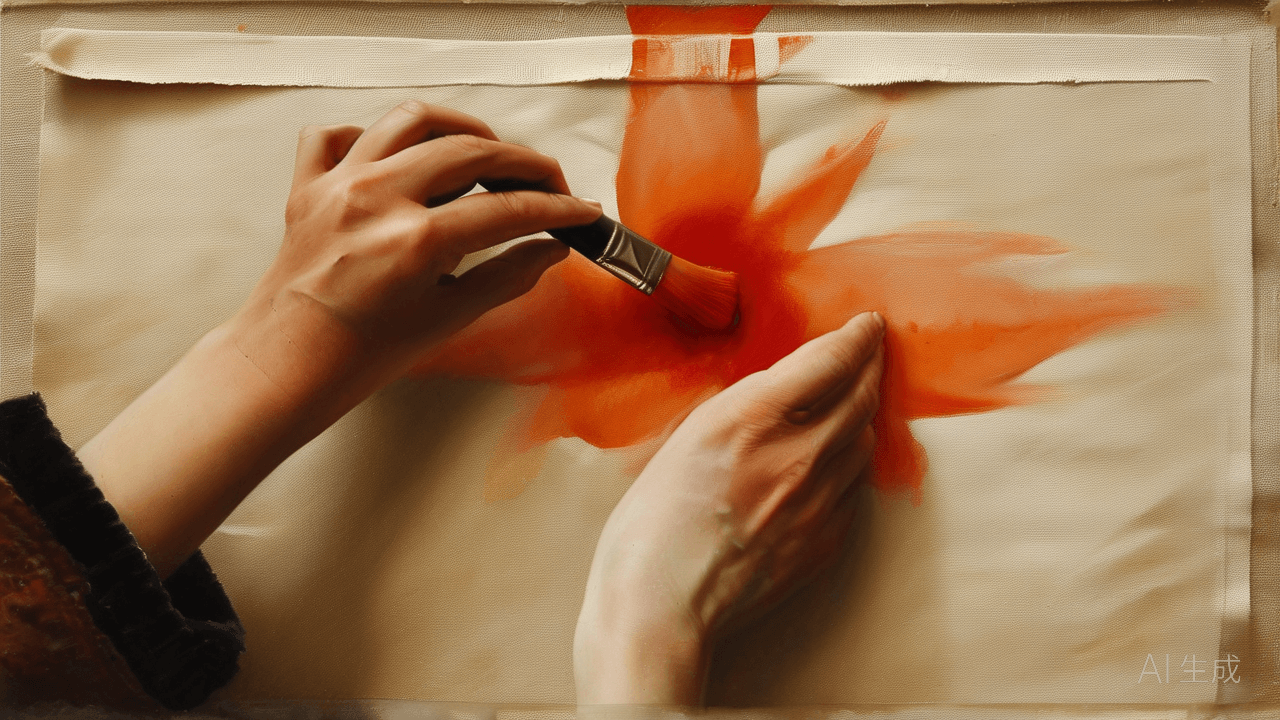
This is not just a dispute over "technical superiority," but a deep-seated power struggle over "who holds the right to define beauty." In traditional artistic philosophy, every brushstroke represents the creator's soul and effort. In the logic of AI, however, beauty is merely a set of probabilistic data that can be calculated and generated. This fundamental clash in underlying logic has turned what was once a harmonious creative community into a tense battleground.
II. Why It Matters to You: Your Aesthetics Are Being "Fed" by Algorithms
You might think, "I don't paint or do design work—why should this concern me?"
It matters more than you think. The advertising posters, social media graphics, and even background images in short videos that you see daily are increasingly being generated by AI. This means the production method behind the visual information you consume every day has fundamentally changed.
From another perspective, the impact of AI on the creative industry is essentially a restructuring of "attention allocation mechanisms." In the past, appreciating a good painting required expertise and time. Now, AI uses big data to precisely generate images that best fit mass tastes and trigger emotional resonance.
| Dimension | Traditional Human Creation | AI-Assisted/Generated Creation |
|---|---|---|
| Core Value | Emotional expression, unique perspective, manual traces | High efficiency, diverse styles, extremely low cost |
| Audience Experience | Feeling the warmth and story of the creator | Receiving highly customized visual stimulation |
| Ethical Risks | Fewer plagiarism disputes | Unclear training data sources, ambiguous copyright ownership |
This implies that, as ordinary users, our aesthetic sensibilities may be getting "domesticated" by algorithms. If we are exposed only to AI-generated "perfect" images for a long time, we may gradually lose patience with human works that contain flaws, clumsiness, yet are full of vitality.
III. Why Artists Are Split: Pragmatism vs. Purism
In the UNC debate, we can clearly see two opposing positions.
The first camp is the "Pragmatists." These are mostly freelancers or commercial designers. For them, AI is a powerful co-pilot. For example, an illustrator can use AI to quickly generate dozens of sketch concepts, pick up inspiration from them, and then refine the details by hand. In their view, rejecting AI is rejecting evolution; eventually, they will be eliminated by the market.
The second camp is the "Purists." These are often academic painters or independent artists. They believe the essence of art lies in "human presence." If pressing the enter key can yield a masterpiece, then the act of "creation" itself loses its meaning. Reports indicate that these artists are particularly concerned about the unauthorized use of their existing works during the AI training process, viewing it as a form of "theft" in the digital age.
In my view, this split is not irreconcilable; rather, it reflects class stratification within the creative industry. For basic execution-level workers who trade physical labor for pay, AI is a dimensional strike. But for high-end creative layers who rely on unique ideas, emotional resonance, and brand premium, AI is just a tool. The real danger isn't that AI steals jobs, but that it eliminates the survival space for "mediocre creativity" in the middle layer.
IV. A Word of Caution: Don't Mistake "Assistance" for "Replacement"
When observing this debate, there are several misconceptions to watch out for.
First, do not over-interpret claims that "AI will replace humans." Current AI is more like a super-efficient intern. It can handle massive amounts of repetitive work, but it still falls far short of senior human experts in understanding complex contexts, grasping subtle emotions, and making disruptive innovations. Whether AI can be viewed as a fully independent creator remains to be seen.
Second, be wary of copyright traps. If you use AI-generated images for commercial purposes, legal definitions globally remain vague. In some jurisdictions, purely AI-generated content may not receive copyright protection, meaning others could copy your "work" without penalty.
Finally, maintain critical thinking. When you see a stunning piece of artwork online, ask yourself: Is this drawn by a human or generated by AI? This isn't just out of curiosity; it's to maintain our ability to judge "authenticity."
V. Broader Perspective: Historical Echoes from Photography to AI
Historically, whenever new technology emerges, similar panics follow. When photography was invented in the 19th century, painters collectively protested, believing photographs would kill painting. The result? Photography forced painting to break free from the constraints of "realism," giving rise to great movements like Impressionism and Cubism.
AI may play a similar role. It may not destroy art, but it will force humans to rethink: When machines can draw anything, what must humans insist on drawing? The answer might be: those things that cannot be quantified, cannot be calculated, and belong solely to human fragility and uniqueness.
For ordinary people, the way forward is simple: Use the tools well, but maintain your agency. You can use AI to help with layout, color schemes, and finding inspiration, but the final decisions, the injection of emotion, and the telling of the story must remain in your hands.
A summary worth sharing: AI hasn't killed creativity; it has simply filtered out the "mediocre," leaving us with a purer test of "humanity."
Discussion: In your work or life, have you ever had a moment using an AI tool where you felt "offended" or "extremely efficient"? Feel free to share your specific experience.